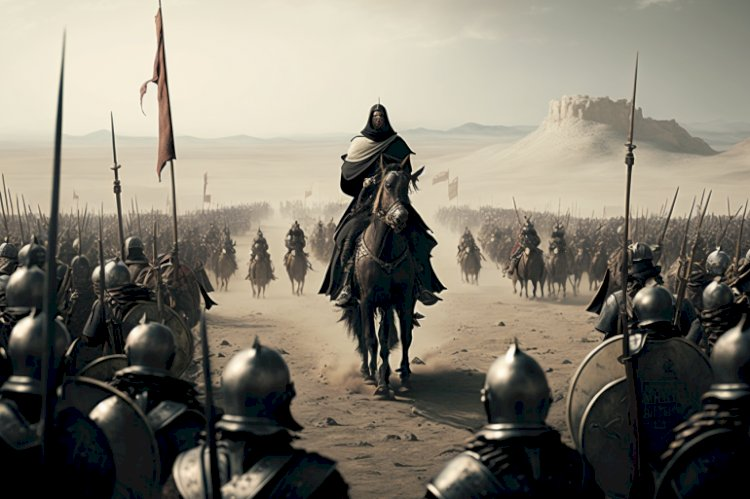

The Battle of Uhud, fought on March 23, 625 CE, is a significant chapter in Islamic history. This battle, which took place near Mount Uhud in Medina, was a follow-up to the Battle of Badr, where the Muslims had secured a decisive victory over the Quraysh of Mecca. Uhud was not just a battle of swords and spears but also a profound lesson in faith, unity, and strategy for the early Muslim community.
Background: Retaliation and Determination
The Quraysh of Mecca were determined to avenge their defeat at Badr. Their loss had not only diminished their prestige but also challenged their control over the Arabian Peninsula. Driven by a desire for revenge and to reassert their dominance, the Quraysh, under the leadership of Abu Sufyan, assembled a formidable army of 3,000 men.
The Muslim community in Medina, although smaller in number, was resolute and prepared to defend their newfound sanctuary. The Prophet Muhammad, aware of the impending threat, consulted his companions. While some suggested a defensive stance within the city, others, particularly the younger warriors, advocated for an offensive approach outside Medina. The decision was made to confront the Quraysh at the plains of Uhud, leveraging the strategic advantage of the terrain.
The Battle Formation: Strategic Positioning
The Muslims, numbering around 700, including 50 archers, positioned themselves with Mount Uhud at their backs. This natural barrier prevented a rear assault. The archers were stationed on a small hill, known as Jabal al-Rumah, with explicit instructions from the Prophet Muhammad not to abandon their posts, regardless of the battle’s outcome.
The Quraysh, led by skilled commanders like Khalid ibn al-Walid, positioned their forces opposite the Muslims. Their strategy aimed at breaking the Muslim ranks and achieving a decisive victory to avenge Badr.
The Battle Unfolds: Initial Success and a Turn of Tides
The battle began with customary single combats, which saw notable Muslim warriors like Ali ibn Abi Talib and Hamza ibn Abdul-Muttalib emerging victorious. Encouraged by these early successes, the Muslim forces launched a vigorous attack, causing the Quraysh lines to falter.
Believing victory was within reach, many of the Muslim archers left their strategic positions on Jabal al-Rumah to join the pursuit of the retreating Quraysh and gather spoils. This critical lapse in discipline was swiftly exploited by Khalid ibn al-Walid, who led a cavalry charge around the hill, attacking the Muslims from behind.
The sudden onslaught caused chaos within the Muslim ranks. The Prophet Muhammad himself was injured, and many key figures, including Hamza, were martyred. Despite the disarray, the Prophet and a core group of companions managed to rally and retreat to higher ground, preventing a total rout.
The Aftermath: Reflection and Resilience
The Battle of Uhud resulted in the loss of around 70 Muslim warriors. For the Quraysh, although tactically successful, their victory was incomplete as they failed to pursue and annihilate the Muslim forces. The psychological impact on the Muslim community was significant, but it also brought essential lessons to the forefront.
The Muslims recognized the importance of strict adherence to strategic commands and the dangers of disobedience. The Quranic revelations that followed the battle emphasized these lessons, urging the community to maintain unity, discipline, and unwavering faith.
Legacy: A Testament to Perseverance
The Battle of Uhud is remembered not as a mere defeat but as a profound educational moment for the early Muslims. It underscored the complexities of warfare and the critical importance of strategic patience and collective responsibility. The lessons learned at Uhud strengthened the Muslim community, preparing them for future challenges and eventual victories, including the conquest of Mecca.
For contemporary Muslims, Uhud serves as a powerful reminder of the values of perseverance, faith, and the consequences of disunity. It exemplifies how setbacks can be transformed into opportunities for growth and how collective wisdom and strategic discipline are paramount in achieving long-term success.
Conclusion: Enduring Lessons from Uhud
The Battle of Uhud stands as a pivotal event in Islamic history, illustrating the early Muslim community’s resilience and capacity to learn from adversity. It is a testament to the Prophet Muhammad’s leadership and the unwavering faith of his followers. The lessons of Uhud continue to inspire and guide Muslims, emphasizing the enduring principles of unity, discipline, and steadfastness in the face of challenges.