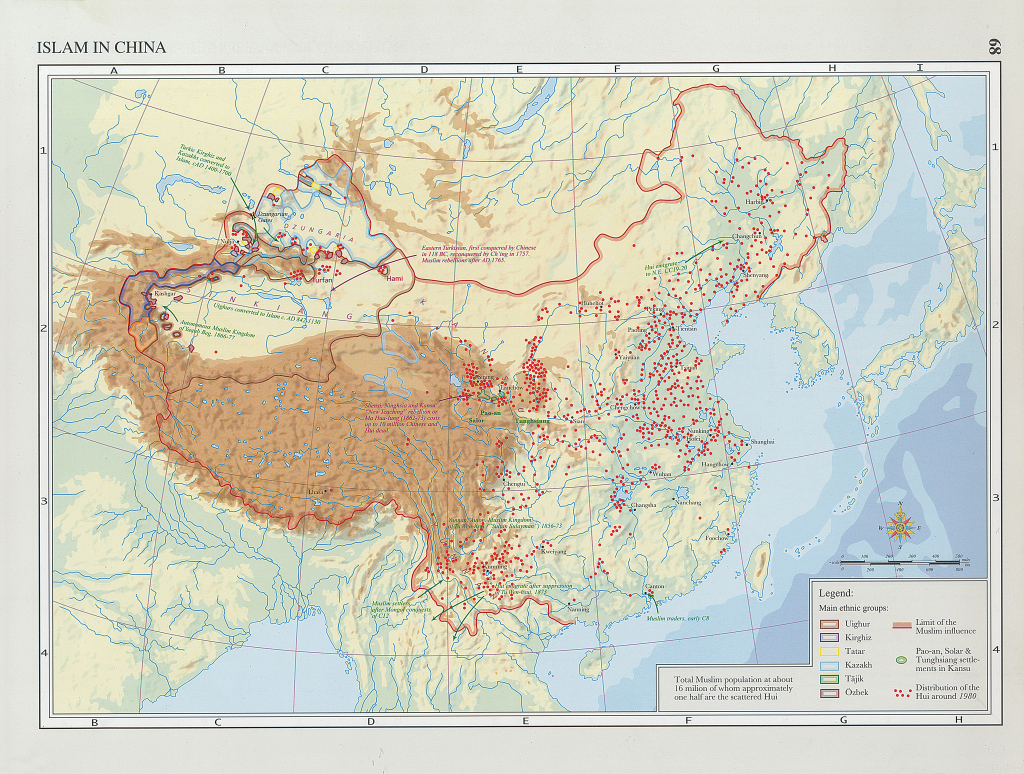
Islam came to China in two main ways. One way was by sea from the south-east. Muslim traders travelled by ship to Canton. The other way was by land from the north-west. They travelled through the Pamir Mountains, the Tarim Basin, Kansu, and Shensi. This route was part of the old Silk Road.
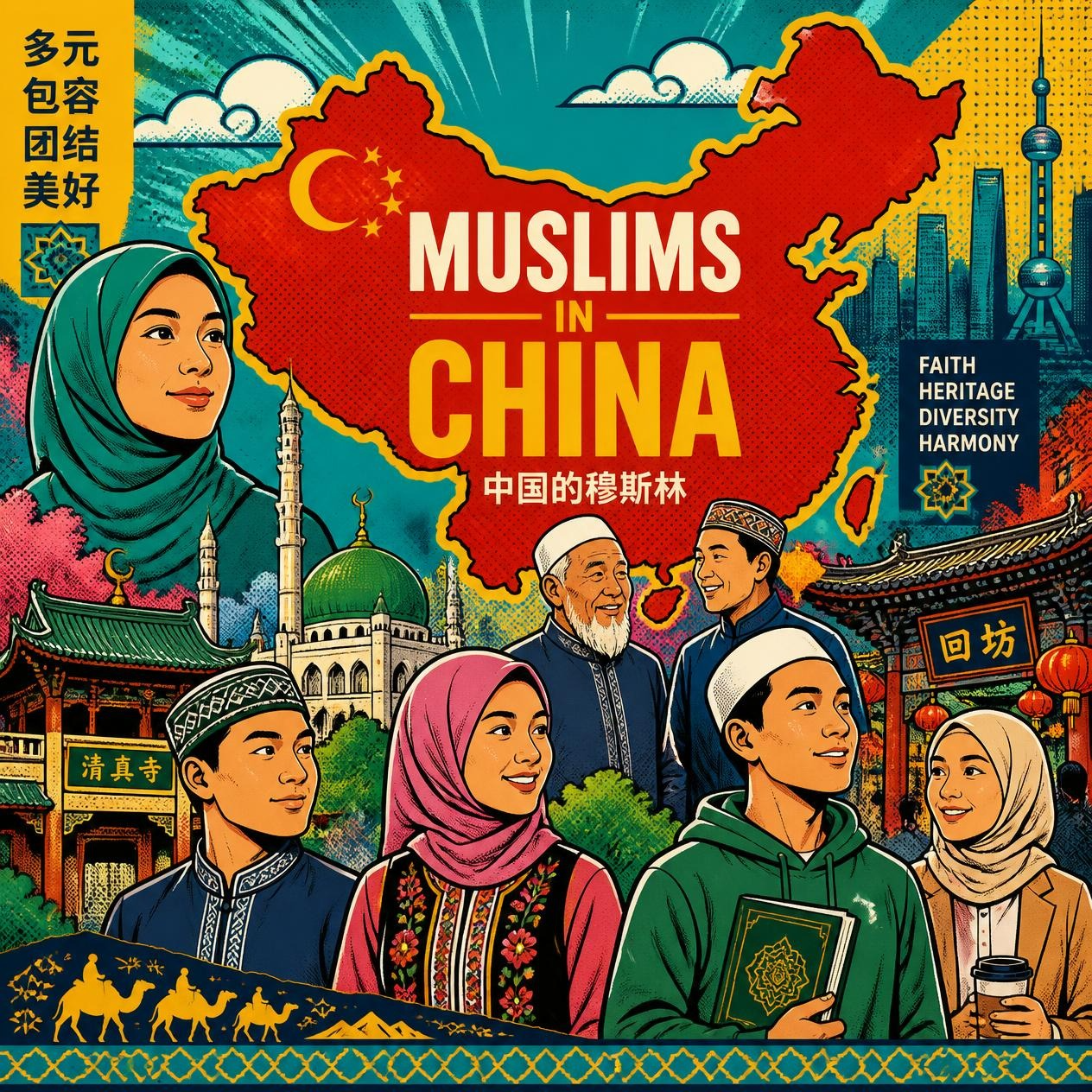
Many Muslims who came to China were traders, soldiers, and travellers. In the south-east, many were Arabs and Persians. In the north-west, many were Turks and Persians. Some of them stayed in China and married Chinese women. Their families later became part of the Hui Muslim community. The Hui are Chinese-speaking Muslims, and they live in many parts of China today.
China also has other Muslim groups. These include Turkic Muslims, Tajiks in the far west, and the Tung-Hsiang people in Kansu, who have Mongol roots. Most Chinese Muslims are Sunni Hanafi. The Tajiks are different because they follow the Nizari Ismaili branch of Islam. Some Chinese Muslims, especially the Hui, belong to different local groups. The most important Sufi group among them is the Naqshbandi.
Muslims are about 2% of China’s population. This may sound small, but China has a very large population. Because of this, China has many Muslims. In 2010, there were about 23.3 million Muslims in China. By 2030, this number was expected to grow to almost 30 million. Among countries where Muslims are a minority, only India, Nigeria, and Ethiopia have more than 20 million Muslims.