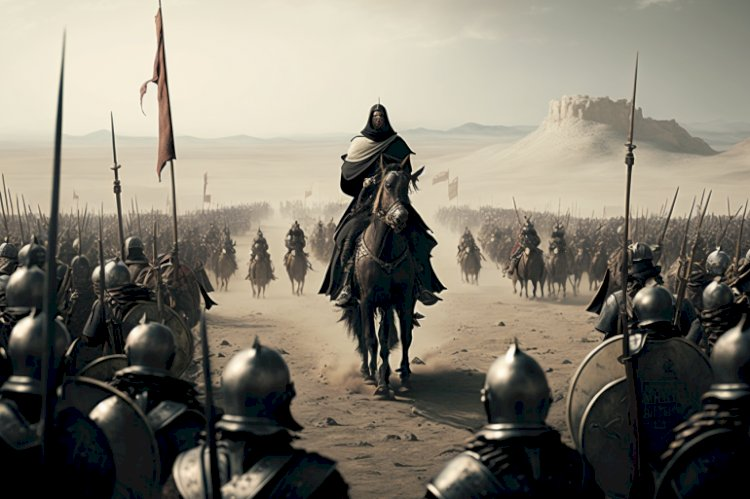

On the 9th of Dhul Hijjah, during the final Hajj pilgrimage, Prophet Muhammad ﷺ stood on the plain of Mount Arafat and delivered his Last Sermon. With thousands of Companions gathered around him, he shared a message that would continue to guide the Muslim Ummah until the end of time.
The sermon carried the weight of a final farewell. The Prophet ﷺ knew that he might never stand before his people again, so he urged them to listen carefully, preserve his words, and pass them on to those who were not present.
The Last Sermon of Prophet Muhammad ﷺ
“O People, listen to me carefully, for I do not know whether I will meet you again after this year. Therefore, listen closely to what I say and convey my words to those who could not be present today.
“O People, just as you regard this month, this day, and this city as sacred, regard the life and property of every Muslim as a sacred trust. Return every trust to its rightful owner. Do not harm anyone, so that no one harms you.
“Remember that you will meet your Lord, and He will hold you accountable for your deeds. Allah has forbidden interest, so all interest obligations shall now be cancelled. You may keep your original capital, but you must neither oppress others nor allow anyone to oppress you. Allah has decreed that there shall be no interest, and all interest owed to Abbas ibn Abdul Muttalib, the Prophet’s uncle, is now cancelled.
“Guard yourselves against Satan for the sake of your religion. He has lost hope of leading you astray through major matters, but he will still try to mislead you through smaller ones. Therefore, remain watchful.
“O People, you have rights over your women, and they also have rights over you. You have accepted them as your wives through Allah’s trust and permission. If they fulfil their responsibilities, then you must provide them with food and clothing in kindness. Treat your women well and show them compassion, for they are your partners and committed helpers.
“O People, listen carefully. Worship Allah, perform your five daily prayers, fast during Ramadan, give Zakat from your wealth, and perform Hajj if you have the means.
“All humanity comes from Adam and Eve. An Arab has no superiority over a non-Arab, and a non-Arab has no superiority over an Arab. A white person has no superiority over a Black person, and a Black person has no superiority over a white person. No one holds superiority over another except through piety and righteous action.
“Know that every Muslim is a brother or sister to every other Muslim, and that all Muslims form one united brotherhood. Nothing belonging to another Muslim becomes lawful for you unless they give it freely and willingly. Therefore, do not wrong one another.
“Remember that you will one day stand before Allah and answer for your deeds. So, after I am gone, do not turn away from the path of righteousness.
“O People, no prophet or messenger will come after me, and no new faith will begin. Think carefully about what I have conveyed to you. I leave behind two guides for you: the Qur’an and my Sunnah. If you hold firmly to them, you will never go astray.
“Those who hear my words must pass them on to others, and those people must pass them on again. Perhaps those who receive my message later will understand it better than those who hear it from me today. O Allah, bear witness that I have conveyed Your message to Your people.”
Why the Last Sermon Still Matters
The Last Sermon stands as a final message, warning, and source of guidance for believers. It teaches us how to seek Allah’s pleasure, protect ourselves from injustice, and prepare for the Day when we will answer for every deed.
The sermon presents the central principles of Islam and reminds us of our responsibilities toward Allah and toward one another. Its message remains as powerful today as it was when the Prophet ﷺ delivered it.
1. Islam Calls Humanity to Equality
The Last Sermon teaches that Islam rejects racism, arrogance, and every form of discrimination. It calls Muslims to build their relationships on faith, character, and righteous action—not on race, colour, language, nationality, or culture.
“All humanity comes from Adam and Eve. An Arab has no superiority over a non-Arab, and a non-Arab has no superiority over an Arab. A white person has no superiority over a Black person, and a Black person has no superiority over a white person, except through piety and righteous action.”
— Prophet Muhammad ﷺ, the Last Sermon
When the Prophet ﷺ delivered these words, they challenged the deep-rooted divisions of society. He reminded humanity that every person shares the same origin and that true honour comes from devotion to Allah and good character.
This message calls us to judge people by their integrity and deeds rather than by their background. It also reminds Muslims that they belong to one brotherhood and must stand together through hardship, injustice, and uncertainty.
“Know that every Muslim is a brother or sister to every other Muslim, and that all Muslims form one united brotherhood.”
— Prophet Muhammad ﷺ, the Last Sermon
2. Islam Commands Us to Honour Trusts and Rights
The sermon places justice, honesty, and kindness at the heart of Islam. It commands us to protect the rights of others, return what people entrust to us, and avoid causing harm.
“Regard the life and property of every Muslim as a sacred trust. Return every trust to its rightful owner. Do not harm anyone, so that no one harms you.”
— Prophet Muhammad ﷺ, the Last Sermon
The Prophet ﷺ also warned Muslims not to take what belongs to others unless the owner gives it freely and willingly. This principle reaches far beyond wealth. It includes people’s lives, property, dignity, privacy, time, and confidence.
The sermon also commands believers to treat women fairly, show them kindness, and fulfil the rights Allah has given them. By delivering this message, the Prophet ﷺ reminded men that marriage carries responsibility, mercy, and trust—not domination or neglect.
The sermon further reminds us that our lives, time, abilities, and freedom all represent trusts from Allah. We must honour that trust by fulfilling our religious obligations, performing the five pillars of Islam, avoiding injustice, and staying away from interest.
“Remember that you will one day stand before Allah and answer for your deeds. So, after I am gone, do not turn away from the path of righteousness.”
— Prophet Muhammad ﷺ, the Last Sermon
3. Protecting Ourselves from the Traps of Shaytaan
The Last Sermon warns us to remain alert because Shaytaan constantly seeks opportunities to lead people away from Islam. He may not always begin with a major sin. Instead, he often starts with small compromises, careless thoughts, and seemingly harmless actions.
“Guard yourselves against Satan for the sake of your religion. He has lost hope of leading you astray through major matters, but he will still try to mislead you through smaller ones.”
— Prophet Muhammad ﷺ, the Last Sermon
This warning teaches us to guard our hearts, thoughts, words, and actions. Shaytaan can gradually pull a person away from obedience by making small sins appear insignificant. For that reason, believers must avoid not only what Allah has forbidden but also the paths that lead towards it.
We should examine our intentions, resist temptation, and return to Allah whenever we fall short. Even when a sin appears small, it can weaken the heart if we continue repeating it without repentance.
A Message That Still Lives in Our Hearts
The Last Sermon remains a timeless source of guidance. It teaches us to worship Allah sincerely, protect the rights of others, reject racism, honour our trusts, treat women with kindness, strengthen the bonds of brotherhood, and protect ourselves from Shaytaan.
The Prophet Muhammad ﷺ delivered this message as a final act of mercy and concern for his Ummah. He wanted us to remain firm after his departure and to follow the Qur’an and his Sunnah throughout our lives.
We should keep his words alive—not only by reciting them, but by putting them into practice. Every time we choose justice over oppression, kindness over cruelty, humility over arrogance, and obedience over temptation, we honour the message he delivered on that sacred day.
May Allah help us understand the Last Sermon, live by its guidance, and carry its message with sincerity. May He allow us to follow the example of Prophet Muhammad ﷺ and meet him at the Hawd with hearts that remained faithful to his teachings. Ameen.