

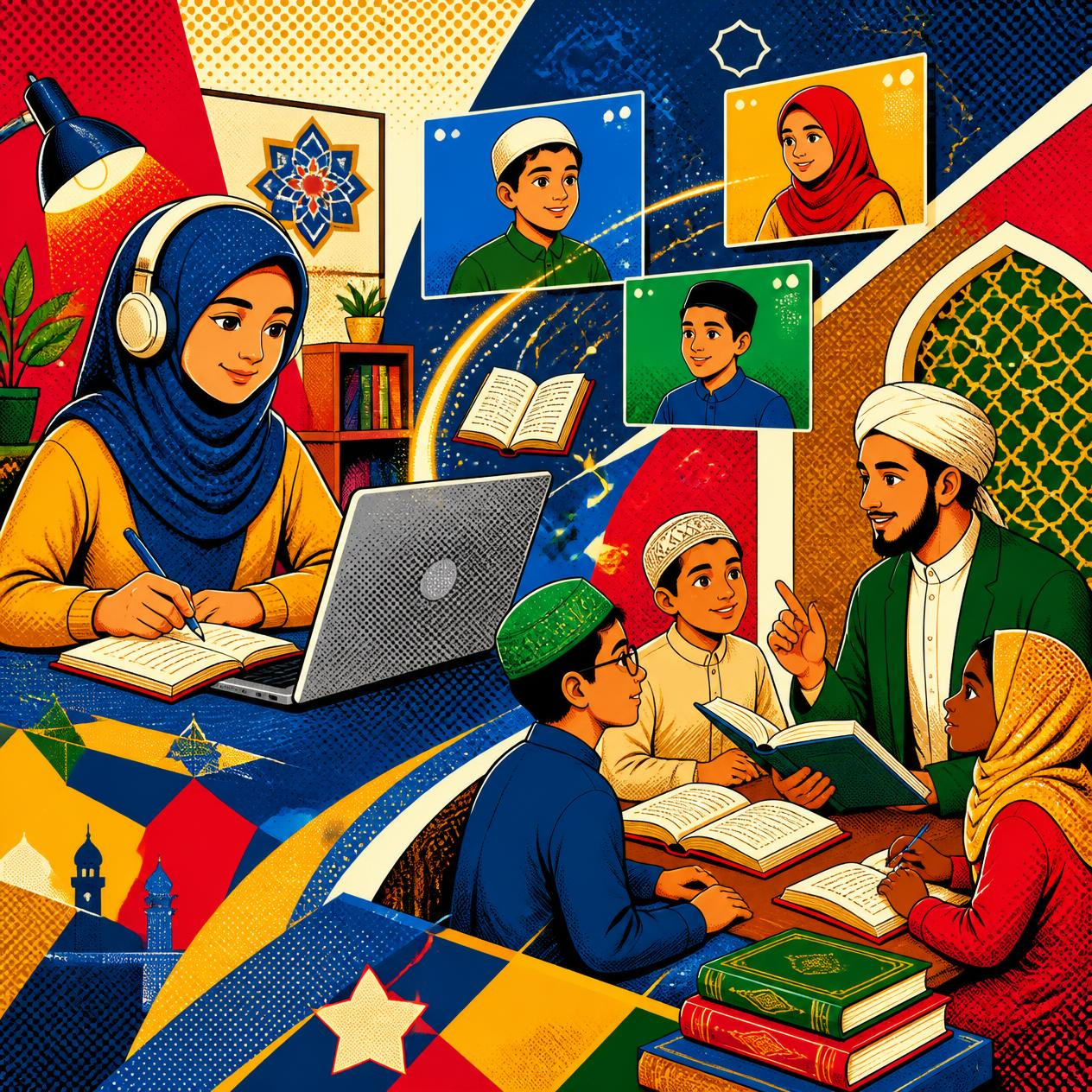
Islamic knowledge is one of the greatest gifts a person can seek. For many years, students learned Islam mainly through traditional madrasahs. They sat with teachers, studied classical books, memorised texts, and grew through discipline, manners, and community.
Today, online Islamic courses have opened a new door. A person can now study Qur’an, Hadith, Arabic, Fiqh, Seerah, and many other subjects from home. This has made Islamic learning easier to access than ever before.
But many people ask an important question:
Is online Islamic learning the same as studying in a traditional madrasah?
The honest answer is: both have great benefits, but they are not exactly the same.
What Is Traditional Madrasah Learning?
Traditional madrasah learning usually means studying Islam in a physical classroom under qualified teachers. Students follow a set curriculum and study step by step over a number of years.
In many madrasahs, students do not only learn information. They also learn adab, discipline, respect, patience, and how to carry themselves as students of sacred knowledge.
This type of learning often includes:
- Sitting directly with teachers
- Studying classical Islamic texts
- Learning with classmates
- Following a fixed timetable
- Being corrected in person
- Building strong teacher-student relationships
The madrasah system is not just about gaining knowledge. It is also about personal training.
What Are Online Islamic Courses?
Online Islamic courses allow students to study through videos, live classes, recorded lessons, notes, quizzes, and online discussions. Some courses are short and simple, while others are structured over months or years.
They are especially useful for people who cannot attend a madrasah because of work, family, location, health, or other responsibilities.
Online learning can include:
- Live lessons with teachers
- Recorded classes
- Flexible study times
- Access from anywhere
- A wide choice of subjects
- Learning at your own pace
For many people, online courses are the reason they are able to study Islam at all.
The Strength of Traditional Madrasah Learning
One of the biggest strengths of traditional madrasah learning is direct connection with teachers.
In Islam, knowledge is not only taken from books. It is passed from teacher to student. A teacher does more than explain the lesson. They guide the student, correct mistakes, answer questions, and help shape the student’s character.
In a madrasah, students also benefit from the environment. Being around teachers and fellow students creates motivation. It helps a student stay focused and serious. The routine of attending classes every day builds discipline.
Another important part of madrasah learning is adab. Students learn how to respect knowledge, how to behave with teachers, and how to study with humility. These lessons are sometimes learned without being directly taught. They are picked up through the environment.
The Strength of Online Islamic Courses
Online Islamic courses are powerful because they make knowledge accessible.
Not everyone can leave their home, move to another city, or study full-time in a madrasah. Some people are working. Some are parents. Some live far from Islamic institutions. For them, online courses can be a major blessing.
Online learning also gives students flexibility. They can listen to lessons after work, revise recordings, pause when needed, and study at a comfortable speed.
Another benefit is variety. Online students can learn from teachers around the world. They can choose beginner, intermediate, or advanced courses depending on their level.
For many Muslims today, online courses are not a replacement for love of knowledge. They are a doorway into it.
The Main Difference: Environment
The biggest difference between traditional madrasah learning and online Islamic courses is the learning environment.
In a madrasah, the student is surrounded by knowledge. The classroom, teachers, classmates, timetable, and daily routine all support learning.
Online, the student has more freedom. But that freedom can be both a benefit and a challenge. A student can study at any time, but they can also delay lessons. They can access many courses, but they may also jump from one topic to another without structure.
Traditional learning gives the student an environment.
Online learning requires the student to create their own environment.
Discipline Is Different
In a madrasah, discipline is often built into the system. Students have class times, homework, exams, attendance, and teacher supervision.
Online learning depends more on self-discipline. The teacher may provide the lessons, but the student must make time, take notes, revise, and stay consistent.
This does not mean online students are less serious. Many online students are very dedicated. But the responsibility is heavier on them because they must manage themselves.
A madrasah pushes the student forward.
Online learning asks the student to push themselves forward.
Access to Teachers
In traditional madrasah learning, students can often ask questions directly. They can speak to teachers before or after class. Teachers may notice when a student is struggling and guide them.
In online courses, teacher access depends on the course. Some online courses have live Q&A sessions, marking, feedback, and student support. Others only provide recorded videos with little interaction.
This is why not all online courses are the same. A strong online course with teacher support is very different from simply watching random videos.
Good Islamic learning needs guidance, not just information.
Depth of Study
Traditional madrasah programmes usually offer deeper and more structured learning. Students study subjects in order. They build foundations before moving to advanced topics.
Online courses can also be structured, but some are short and focused on one topic. This is useful, but it may not give the same depth as a full madrasah programme.
For example, a short online course on Fiqh may teach important rulings. But a full madrasah curriculum may also teach the principles, proofs, differences of opinion, Arabic terms, and how scholars reached those rulings.
So, online courses can be excellent, but students should understand the level of what they are studying.
Community and Brotherhood/Sisterhood
Another major benefit of madrasah learning is community. Students learn together, revise together, struggle together, and grow together.
This creates friendship and support. It also teaches patience, teamwork, and humility.
Online learning can sometimes feel lonely. However, many online institutes now offer group chats, student forums, live sessions, and study groups. These can help, but they may still feel different from being physically present with classmates.
Human connection matters in learning.
Which One Is Better?
The answer depends on the student.
Traditional madrasah learning may be better for someone who wants deep, structured, full-time Islamic study with close teacher guidance and a strong learning environment.
Online Islamic courses may be better for someone who needs flexibility, cannot travel, has family or work duties, or wants to begin learning from home.
It is not always a case of one being “good” and the other being “bad.” Both can be beneficial when used properly.
A serious student can benefit from online learning.
A careless student can waste the opportunity of madrasah learning.
The method matters, but the student’s sincerity, discipline, and teacher guidance matter too.
Can Online Courses Replace Madrasah Learning?
In some areas, online courses can teach a lot. They can explain important topics, build foundations, and help people grow in their understanding of Islam.
But in a complete sense, online learning may not fully replace the traditional madrasah experience. This is because madrasah learning includes direct companionship, environment, discipline, and personal training.
However, online courses can still be a very valuable path, especially when they are taught by qualified teachers and followed with seriousness.
For many people, online learning may be the first step. Later, it may inspire them to study more deeply, attend classes in person, or join a structured programme.
A Balanced Way Forward
Instead of arguing over which method is better, we should ask a better question:
How can we benefit from both?
A student can attend a local madrasah and also use online courses for revision.
A busy adult can begin with online courses and slowly build a habit of learning.
A young student can study traditionally but use online resources to strengthen weak areas.
The goal is not to defend one method blindly. The goal is to seek knowledge in the best way available to us.
Final Thoughts
Traditional madrasah learning and online Islamic courses both have their place.
Madrasah learning offers structure, discipline, direct teacher connection, and a strong Islamic environment. Online learning offers access, flexibility, variety, and opportunity for people who may otherwise be unable to study.
The best choice depends on a person’s situation, goals, and level of commitment.
What matters most is that Islamic knowledge is taken seriously, learned from reliable teachers, and practised with sincerity.
In the end, knowledge is not just about completing a course or attending a class. It is about coming closer to Allah, improving our actions, and living Islam with understanding.
Whether a person studies in a madrasah or online, the real success is when that knowledge changes the heart and improves the life.