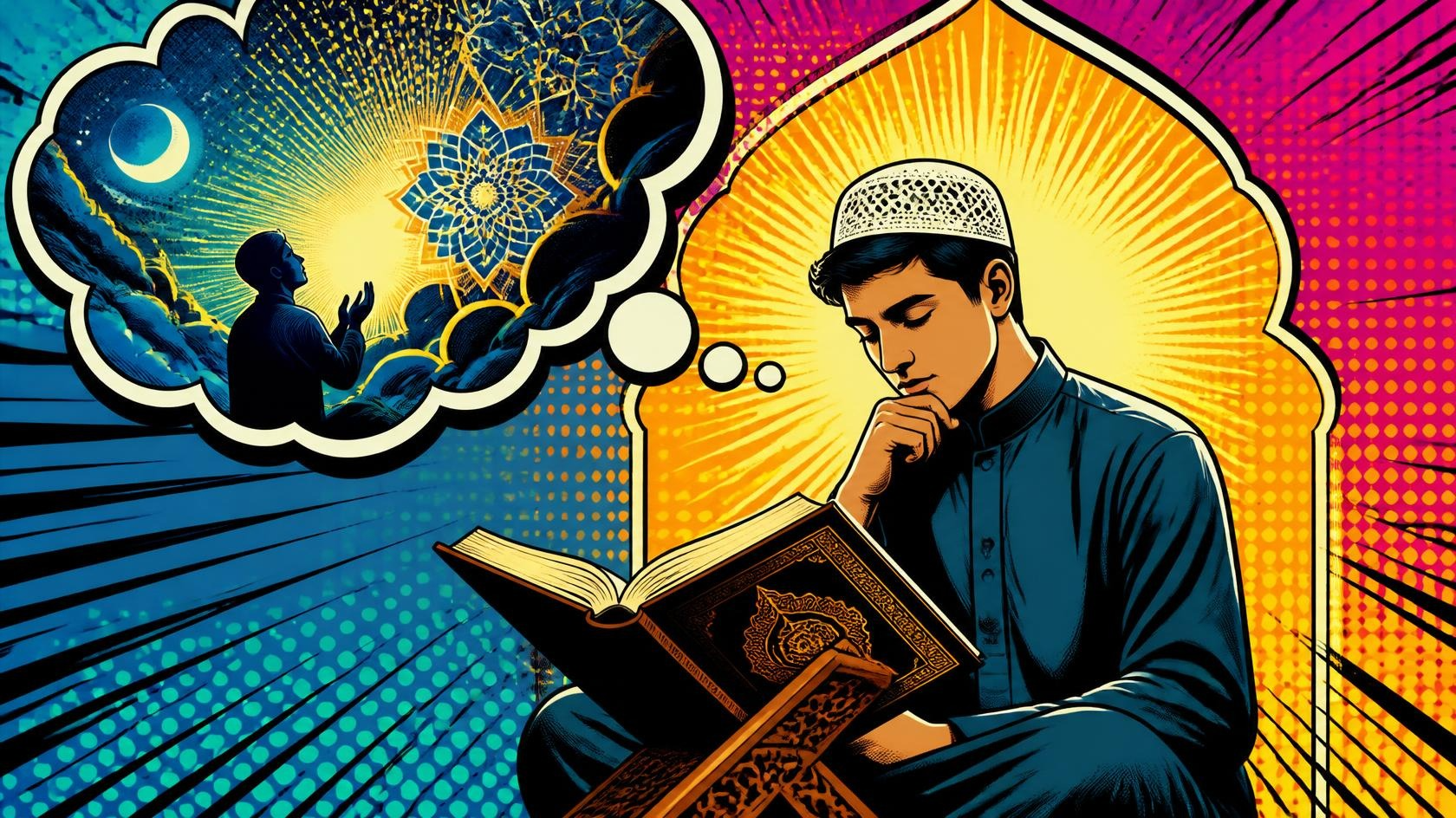
Hifz is often spoken about as a memorisation project, but its real impact reaches much deeper than recall alone. To begin memorising the Qur’an is to enter a long process of inner change, where the mind, the heart, and the self are gradually reshaped by repeated engagement with Allah’s words. Over time, Hifz becomes more than the act of storing verses in memory; it becomes a way of becoming. It changes how a person thinks, how they respond to difficulty, how they carry discipline, and ultimately how they see themselves. This is why Hifz is not just memorisation — it is identity formation.
One of the first transformations happens in memory itself. Memorising Qur’an trains the mind to hold information with precision, repetition, and care. A Hafiz does not simply absorb words once and move on; they revisit, revise, and reinforce constantly. This discipline strengthens concentration and builds mental resilience. In a time when many people struggle with attention and retention, Hifz teaches the brain to slow down, focus deeply, and return again and again to what matters. The mind becomes more ordered, more alert, and more capable of sustained effort.
But the deeper change is in discipline. Hifz cannot survive on motivation alone. It requires consistency, routine, sacrifice, and patience. There are days of ease and days of struggle, moments of progress and moments of forgetting, yet the path continues through commitment. This repeated act of showing up for the Qur’an teaches a person how to live with structure and self-control. Slowly, the same discipline that protects memorisation begins to influence other parts of life as well — study, worship, time management, and personal habits. Hifz trains the soul to remain steady even when results are slow.
Hifz also has a powerful effect on emotional stability. The Qur’an is not just recited by the tongue; it settles into the heart. Over time, its verses become familiar companions in moments of stress, sadness, loneliness, and uncertainty. A person who carries the Qur’an internally does not face life in the same way as before. The recited words of Allah bring calm, perspective, and grounding. Hifz teaches emotional endurance because it repeatedly draws the heart back to revelation instead of reaction. The memorise slowly becomes someone whose inner life is steadier because it is anchored in something far greater than changing circumstances.
Perhaps the most profound transformation is identity. The one who memorises the Qur’an does not remain the same person they were at the beginning of the journey. Hifz shapes self-understanding. It gives a person a sacred responsibility and a new way of seeing their place in the world. They are no longer merely a student, a worker, or a child of their family; they become someone entrusted with carrying the words of Allah. That identity brings honour, humility, and accountability. It reminds the heart that the goal is not only to finish memorisation, but to become someone whose life reflects the Qur’an they carry.
This is why Hifz should never be viewed as a technical achievement alone. It is a deep psychological and spiritual formation, one that reshapes memory, strengthens discipline, stabilises emotions, and builds a new identity rooted in revelation. The Qur’an does not merely fill the mind; it reforms the person. And when approached with sincerity, patience, and love, the Hifz journey becomes one of the most trans formative experiences a Muslim can ever live through.