‘Abdullah ibn Mas‘ud (may Allah be pleased with him) said:
I asked the Prophet ﷺ, “Which deed is most loved by Allah?”
He said, “Prayer offered on time.”
I asked, “Then which deed?”
He said, “Honouring your parents.”
I asked, “Then which deed?”
He said, “Jihad in the cause of Allah.”
Ibn Mas‘ud said, “The Prophet ﷺ told me these answers. If I had asked him for more, he would have told me more.”
Commentary:
The Sahabah (may Allah be pleased with them) loved to do good deeds. They wanted to know which actions would bring them closer to Allah and earn His pleasure. Because of this, they often asked the Prophet ﷺ about the best deeds.
The Prophet ﷺ did not always give the same answer to everyone. Sometimes, his answer changed depending on the person, their situation, and what would benefit them the most.
In this hadith, ‘Abdullah ibn Mas‘ud (may Allah be pleased with him) asked the Prophet ﷺ which deed Allah loves the most.
The Prophet ﷺ answered, “Prayer offered on time.”
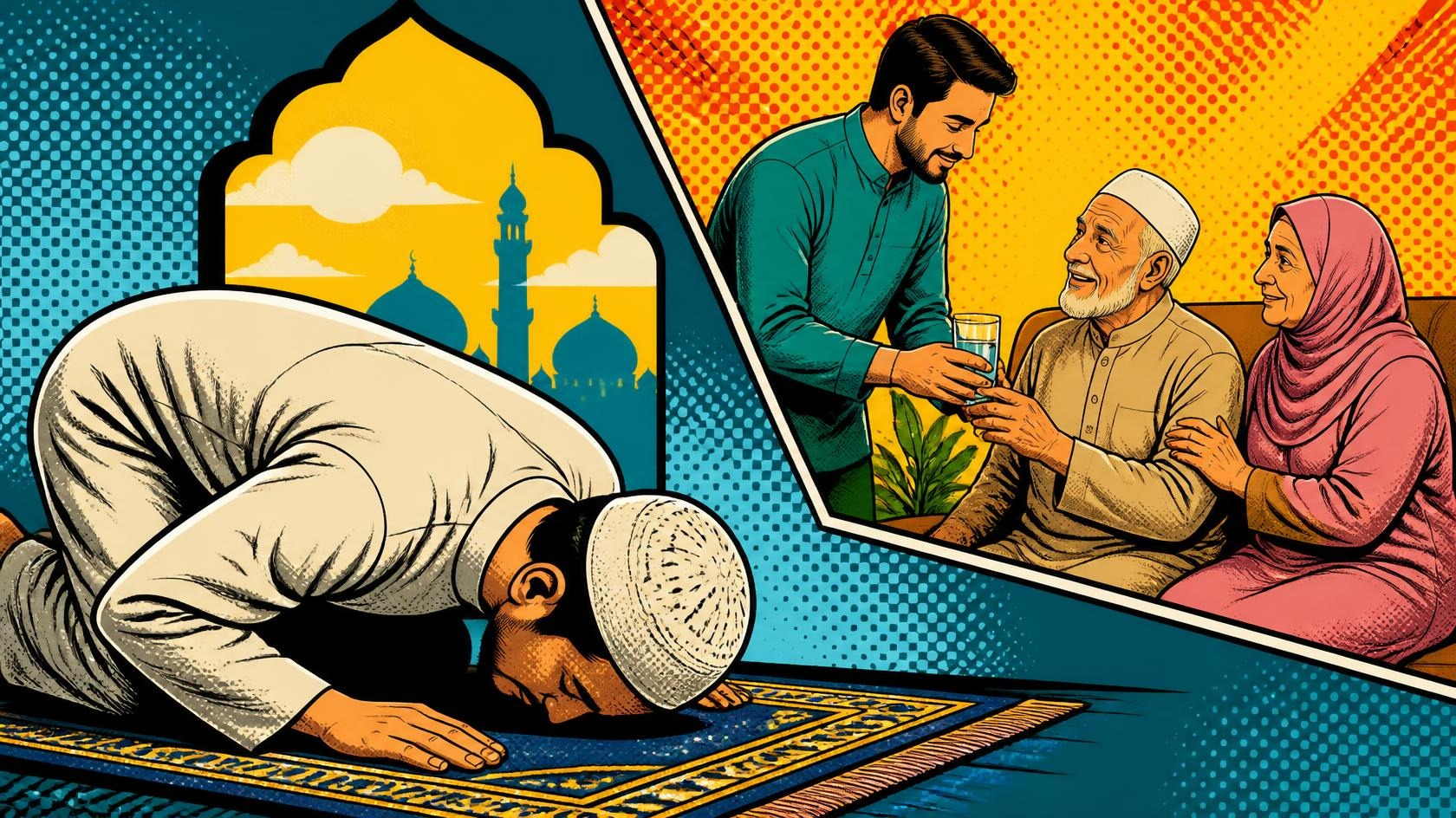
This teaches us that salah is very important. A Muslim should not delay prayer without a reason. When the adhan is called and the time for prayer begins, we should try to pray as soon as we can.
Praying on time shows love, respect, and obedience to Allah. It shows that we care about His command and that we do not take salah lightly.
Allah warns those who are careless with their prayer:
“So woe to those who pray, but are heedless of their prayer.”
[Surah al-Ma‘un 107:4-5]
This includes people who delay prayer without care, or who pray after its proper time has passed.
After prayer, the Prophet ﷺ said that the next best deed is honouring one’s parents.
This means treating parents with kindness, respect, love, and patience. It means helping them, speaking gently to them, and not disobeying them in a bad or rude way.
The rights of parents are very great in Islam. After the right of Allah, one of the greatest rights is the right of parents.
Allah says:
“Be grateful to Me and to your parents.”
[Surah Luqman 31:14]
Then Ibn Mas‘ud asked again, “What comes after that?”
The Prophet ﷺ said, “Jihad in the cause of Allah.”
This means striving for the sake of Allah and working to make His religion strong. It includes giving one’s time, effort, wealth, and, when required, even one’s life for the sake of Allah.
This hadith teaches us that the best deeds include:
- fulfilling the rights of Allah, especially praying on time
- fulfilling the rights of people, especially parents
- striving sincerely for the sake of Allah
These three deeds are very powerful because they show a person’s faith, discipline, love, and sacrifice.
Prayer is the foundation of a Muslim’s life. If a person is careless with prayer, they may become careless with other parts of Islam too.
Honouring parents teaches kindness and responsibility. If a person fails to respect their parents, they may also fail to respect the rights of other people.
Striving in Allah’s cause teaches courage, sincerity, and sacrifice. It shows that a person is ready to give for the religion of Allah.
At the end of the hadith, Ibn Mas‘ud (may Allah be pleased with him) said that if he had asked the Prophet ﷺ for more good deeds, the Prophet ﷺ would have told him more.
This shows how eager the Sahabah were to learn. They did not only want knowledge for information. They wanted knowledge so they could act upon it and become closer to Allah.
This hadith reminds us to focus on the deeds Allah loves most: pray on time, honour our parents, and strive sincerely for His sake.
حَدَّثَنَا مُحَمَّدُ بْنُ الْمُثَنَّى، قَالَ حَدَّثَنَا يَحْيَى، قَالَ حَدَّثَنَا إِسْمَاعِيلُ، قَالَ حَدَّثَنَا قَيْسٌ، عَنْ جَرِيرِ بْنِ عَبْدِ اللَّهِ، قَالَ بَايَعْتُ رَسُولَ اللَّهِ صلى الله عليه وسلم عَلَى إِقَامِ الصَّلاَةِ، وَإِيتَاءِ الزَّكَاةِ، وَالنُّصْحِ لِكُلِّ مُسْلِمٍ.
Narrated Jarir bin `Abdullah: I gave the pledge of allegiance to Allah’s Messenger (ﷺ) for to offer prayers perfectly, to pay Zakat regularly, and to give good advice to every Muslim.
Sahih al-Bukhari 524
https://sunnah.com/bukhari:524