The importance of saying : “Bismillah” and “Salam”. before eating, when starting a journey, entering a home, or simply greeting someone. To an outsider, they might sound like routine religious words, but for a believer, they carry deep spiritual, social, and even psychological meaning. These short phrases quietly shape how a Muslim thinks, behaves, and connects with Allah and with people.
This isn’t just about “nice Islamic phrases.” Understanding Bismillah and Salam reveals a whole way of life: beginning every action with Allah and spreading peace wherever you go.
What “Bismillah” Really Means
“Bismillah” (بِسْمِ اللهِ) means “In the name of Allah.” It’s a simple phrase, but it completely changes how a Muslim approaches life.
When a Muslim says Bismillah before doing something, they are:
- Acknowledging that nothing succeeds without Allah’s permission.
- Asking Allah to place barakah (blessing) in what they’re about to do.
- Seeking protection from harm and from Shayṭān’s influence.
- Purifying their intention, reminding themselves why they are doing this and for whom.
- Starting with humility, not arrogance.
The Prophet ﷺ taught that starting with the name of Allah acts as a shield against Shayṭān. It’s like putting a spiritual lock on your actions, making them harder for evil to corrupt. Suddenly, something as ordinary as taking a bite of food, sending an email, or turning on your car becomes an act of worship and remembrance.
Everyday Moments Transformed by Bismillah
Think of how often we do things on autopilot: eating, working, studying, driving, scrolling our phones. Saying Bismillah is a small pause that says: “Ya Allah, I’m not doing this by my own power. I need You.”
Muslims commonly say Bismillah before:
- Eating and drinking
- Leaving the house or starting a journey
- Beginning work or study
- Driving or travelling
- Writing, speaking, or giving a talk
- Starting any important task or even small chores
It’s not about the size of the action. Whether it’s a big life decision or making a cup of tea, beginning with Bismillah turns that moment into an opportunity to connect with Allah. Over time, this builds a mindset of dependence on Allah, gratitude, and mindful living instead of heedlessness.
The Deep Meaning of “Assalamu Alaikum”
If Bismillah is about how a Muslim begins their actions, Salam is about how a Muslim connects with people.
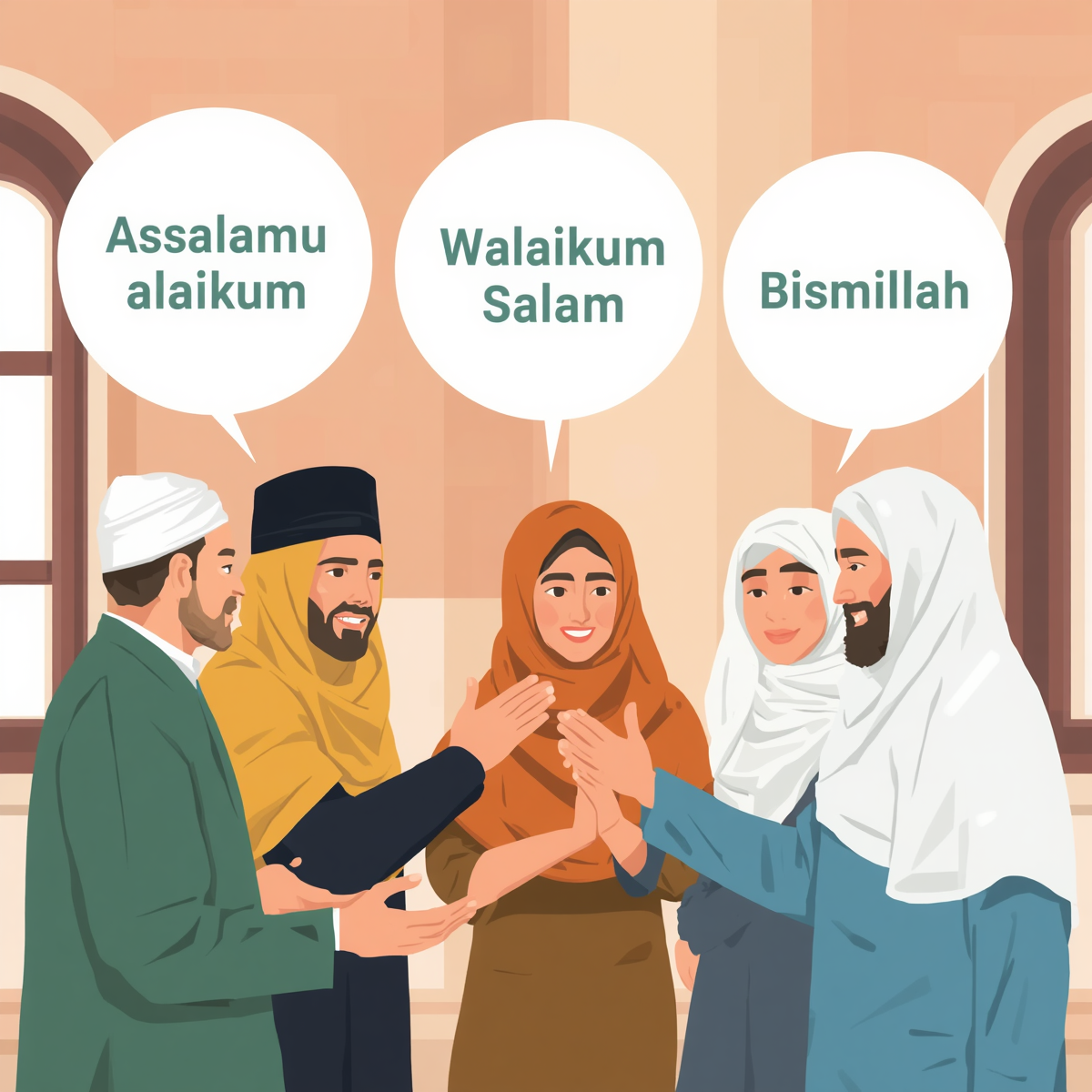
“As-salāmu ʿalaykum” (السلام عليكم) means “Peace be upon you.” It’s more than a cultural greeting. It’s:
- A sunnah and an act of worship.
- A dua (supplication) for the other person.
- A way to spread peace, love, and unity in the community.
Every time a Muslim says Salam, they are literally making a prayer: “May peace, safety, and security be upon you.” The response, “Wa ʿalaykum as-salām” (وَعَلَيْكُمُ السَّلَامُ) — “And upon you be peace” — completes a beautiful exchange of mutual care.
The Prophet ﷺ taught that spreading Salam increases love between Muslims. In a world filled with stress, conflict, suspicion, and loneliness, this simple habit can soften hearts and break down walls. It reminds people that they are part of a larger family of believers.
Salam as a Universal Muslim Identity
One of the most beautiful things about Salam is that it crosses boundaries. A Muslim in London, Lagos, Kuala Lumpur, or Cairo will recognise and use the same greeting.
No matter the language someone speaks or the culture they come from, saying Salam:
- Unites Muslims across race, nationality, and background.
- Instantly signals brotherhood and sisterhood in faith.
- Sets a tone of peace, safety, and respect in every interaction.
In a time when many greetings are empty or casual, Salam stands out as a powerful, meaningful way to say: “I wish you peace — not just on your tongue, but in your heart, your home, and your life.”
How Bismillah and Salam Shape a Muslim’s Character
When you put Bismillah and Salam together, you start to see a full picture of what a Muslim life is meant to look like:
- Begin with Allah — every task, every meal, every journey, every project.
- Spread peace to others — every meeting, every conversation, every relationship.
This combination shapes a person’s character in powerful ways:
- It builds tawakkul (trust in Allah), because you constantly remind yourself that Allah is in control.
- It trains ikhlās (sincerity), because you check your intention whenever you say Bismillah.
- It encourages rahmah (mercy) and ukhuwwah (brotherhood), because Salam keeps you in the habit of praying for others.
- It fights ego and arrogance, because you admit your need for Allah at the start of every action.
Over a lifetime, these small phrases can truly transform a person from the inside out.
Bringing Bismillah and Salam Back Into Your Daily Life
Many of us grew up hearing Bismillah and Salam all the time, but as life gets busy, they can become rushed, mechanical, or even forgotten.
Here are a few simple ways to revive their meaning:
- Slow down when you say Bismillah. Don’t just mumble it. Pause for a second, think about Allah, and then begin.
- Teach your children to say Bismillah before eating and Salam when entering a room or home — with love, not pressure.
- Be the first to say Salam. The Prophet ﷺ encouraged initiating Salam. Make it your signature habit.
- Use Salam online too. Start your messages or voice notes with “As-salāmu ʿalaykum” to bring that same peace into your digital life.
- Remember the reward. Every sincere Bismillah and every Salam is written as a good deed.
In Short
Muslims say Bismillah to start in the name of Allah — seeking His help, His blessing, and His protection. They say Asalamu Alaikum and in return wa Alaikum Saalam to spread peace, dua, and unity among people.
These are not just phrases. They are daily reminders of who we are, who we depend on, and how we should treat one another. When lived with intention, Bismillah and Salam can turn ordinary days into a journey of constant worship, deeper faith, and real human connection.