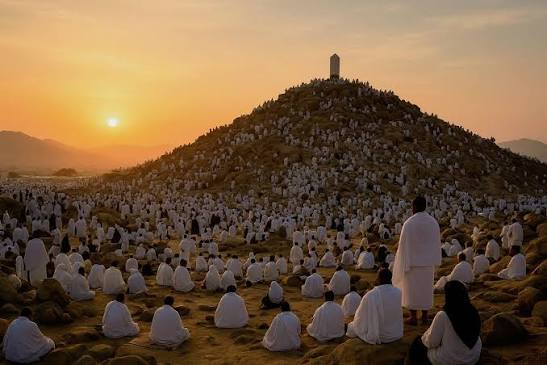
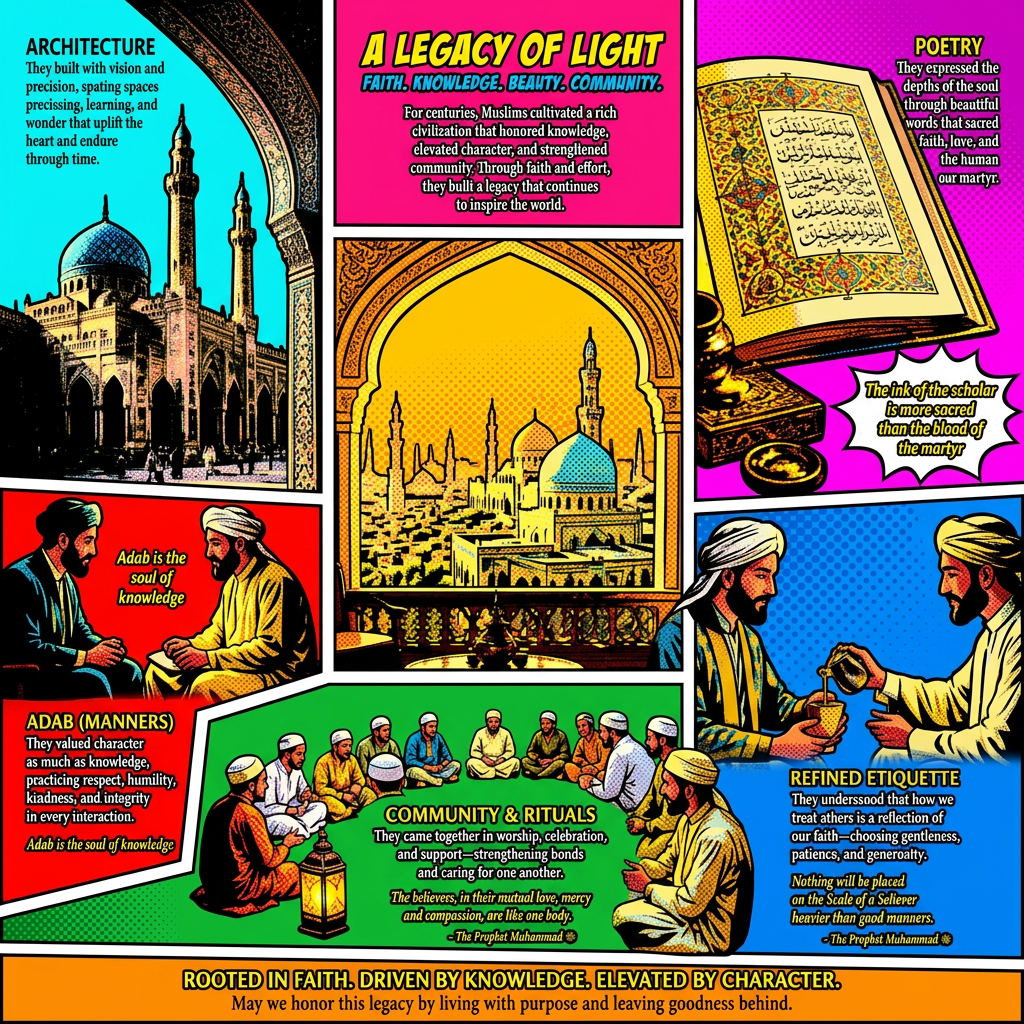
There was a time when Muslim culture was not thin, rushed, or flat. It was rich, textured, and deeply alive. It was carried in the lines of architecture, in the discipline of ad ab, in the beauty of poetry, in the warmth of communal rituals, and in the quiet dignity of everyday manners. Muslim life was not divided into a public religious self and a private social self. Faith, form, beauty, and conduct were woven together so naturally that culture itself became a reflection of belief.
Walk through the history of the Muslim world and this richness is impossible to miss. Mosques were built not only to shelter worship, but to lift the heart upward through proportion, symmetry, light, and space. Poetry was not treated as decoration, but as a serious vessel for meaning, memory, and spiritual insight. Manners were not seen as superficial polish; they were understood as the visible expression of inward character. Even ordinary gatherings, meals, greetings, and acts of hospitality carried a sense of order and meaning. Muslim culture had depth because it was born from an inner world that still knew how to value beauty, restraint, and sacred purpose.
Modern life, however, has flattened much of this inheritance. We are more connected than ever, yet often less rooted. Mass culture rewards speed over reflection, convenience over elegance, and novelty over continuity. Many Muslims now live inside environments that shape them more than their own tradition does. Their tastes are trained by algorithms, their habits by consumerism, and their sense of identity by whatever is most visible, loud, and current. As a result, culture can begin to feel like a collection of borrowed styles rather than a lived expression of a meaningful worldview.
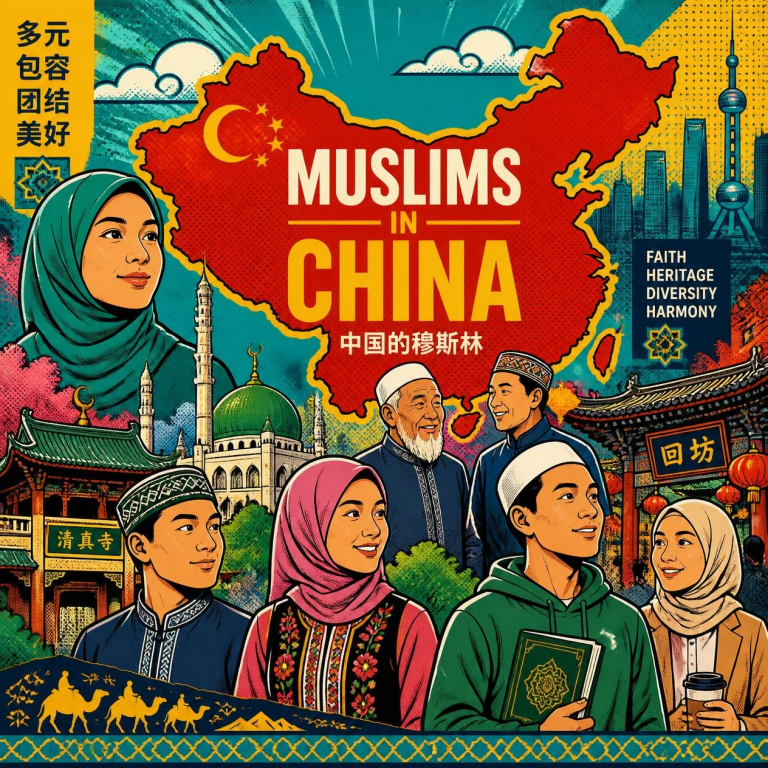
This is why Muslim culture often feels thin today. In many places, it has been reduced to fragments: a few external symbols, occasional celebrations, or a narrow set of assumptions about what “Islamic” looks like. But culture is not only what is worn or displayed. It is how people speak to one another, how families host guests, how children are taught, how spaces are designed, how knowledge is honoured, and how beauty is preserved in everyday life. When these things are neglected, something essential is lost. The faith may remain, but the surrounding atmosphere that once nourished it begins to fade.
Rebuilding Muslim culture does not mean copying the past mechanically. It means recovering the principles that once gave it life. ad ab must be relearned as a serious discipline, not an outdated extra. Poetry, art, and architecture should once again be treated as vehicles of meaning rather than luxuries of taste. Community rituals should be revived with intention so that belonging is felt, not just claimed. Most of all, Muslims must remember that culture grows from what people repeatedly love, practice, and honour. If the heart is trained to value depth, then depth will begin to return to the home, the masjid, the school, and the street.
The loss of Muslim culture is not merely a story of decline; it is also an invitation. It invites Muslims to ask what kind of atmosphere their faith is creating today. Does it produce beauty, dignity, and coherence? Or does it produce fragmentation, imitation, and forgetfulness? A living culture is not built in one generation. It is rebuilt slowly, through seriousness, care, and vision. And if Muslims are willing to recover their sense of ad ab, beauty, and communal life, then what feels thin today can become rich again.