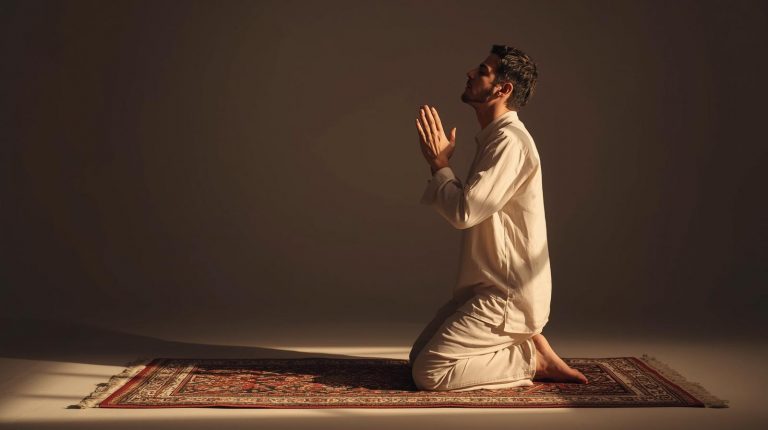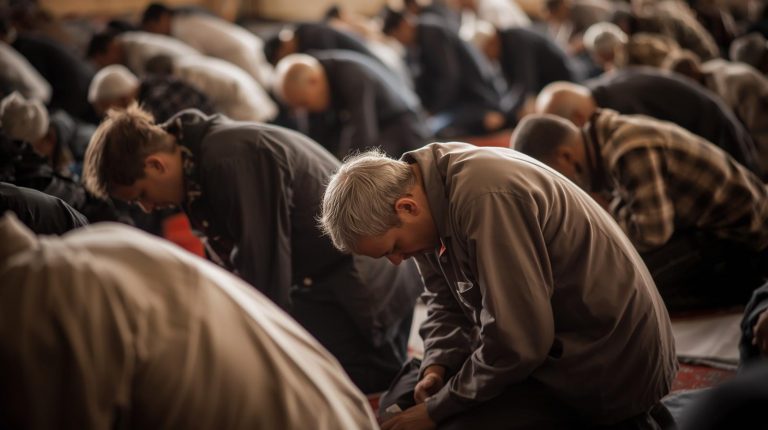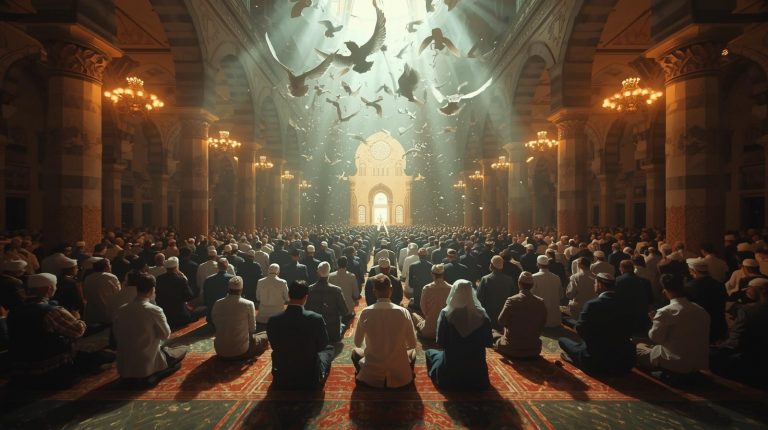

Salat AL-istisqa’ is the prayer Muslims perform when seeking rain from Allah, Exalted be He, especially during times of drought or when rainfall has stopped and people are affected by hardship. It is a way of turning to Allah with humility, recognising that only He has full power to send relief and provide for His creation.
This prayer was also known among previous nations and was practices by the prophets, peace be upon them all. Allah, Exalted be He, says:
“And [recall] when Moses prayed for water for his people…” (Quran: Al-Baqarah: 60)
The Prophet Muhammad (Allah bless him and grant him peace) also performed the Prayer for Rain for his people many times and in different ways. Muslim scholars agree that this prayer is lawful and established in Islam.
When Is Salat AL-istisqa’ Performed?
Salat AL-istisqa’ is performed during times of drought, lack of rain, or when the absence of rain causes harm to people, animals, crops, or the land. In such situations, Muslims turn to Allah and ask Him for rain and mercy.
There are different ways to ask Allah for rain. Muslims may supplicate during prayer, either individually or in congregation. The imam may also make du‘a during the Jumu‘ah sermon, while the congregation says “Ameen.” People may also make du‘a after the daily prayers or privately, without a formal prayer or sermon. All of these ways are reported from the Prophet (Allah bless him and grant him peace).
The Ruling of Salat AL-istisqa’
The Prayer for Rain is regarded as a stressed Sunnah. Many hadiths support this practice. ‘Abdullah Ibn Zayd (may Allah be pleased with him) said:
“The Prophet (Allah bless him and grant him peace) went out to invoke Allah for rain. He faced the qiblah invoking Allah. Then he traversed his cloak and performed two rak’ahs and recited the Quran aloud in them” (Al-Bukhari and Muslim)
This shows that Salat AL-istisqa’ is an important Sunnah that Muslims should observe when there is a need for rain.
How to Perform Salat AL-istisqa’
Salat AL-istisqa’ is similar to the ‘Eid prayer in many of its rulings and practices. It is recommended to perform it in an open prayer area, outside the mosque, just as the ‘Eid prayer is usually performed.
Ibn ‘Abbas (may Allah be pleased with him) narrated:
“The Prophet (Allah bless him and grant him peace) performed two rak’ahs as he does in the Feast (Prayer).
At-Tirmidhi says that this is a hasan (good) and sahih (authentic) hadith, and Al-Hakim and others also considered it authentic.
The prayer consists of two rak‘ahs. It is recommended to recite Surah Al-A‘la in the first rak‘ah and Surah Al-Ghashiyah in the second rak‘ah.
It is also recommended for people to gather in a wide, open place away from their homes. The Prophet (Allah bless him and grant him peace) performed this prayer in the desert. This setting reflects humility, need, and dependence upon Allah, Exalted be He.
Recommended Actions Before Salat AL-istisqa’
Before leading the people in Salat AL-istisqa’, the imam should remind them of Allah’s reward and punishment in a way that softens their hearts. He should encourage them to repent sincerely, seek Allah’s forgiveness, and return any rights they owe to others.
This is because sins are among the reasons blessings may be withheld, while repentance and seeking forgiveness are causes for Allah’s mercy and response. Allah, Exalted be He, says:
“And if only the people of the cities had believed and feared Allah, We would have opened [i.e. bestowed] upon them blessings from the heaven and the earth; but they denied [the messengers], so We seized them for what they were earning” (Quran: Al-A’raf:96)
The imam should also encourage people to give charity to the poor and needy, as charity is a means of attaining Allah’s mercy.
After this, the imam may appoint a specific day for the people to gather and perform the prayer. On that day, Muslims should go out to the prayer place with humility, submissiveness, and a sense of need before Allah.
Ibn ‘Abbas (may Allah be pleased with him) said:
“Allah’s Messenger (Allah bless him and grant him peace) went out to perform the Prayer for Rain showing humility humbleness, and submissiveness and supplicating (Allah).” (At-Tirmidhi said that this is a hasan, sahih (good, authentic) hadith.)
Those who are able should not stay behind. Men, women, and even children may attend, as long as their presence is appropriate and does not lead to temptation or harm.
The Sermon of Salat AL-istisqa’
After leading the people in two rak‘ahs, the imam delivers a sermon. Some scholars hold that the imam may deliver two sermons, while others say one sermon is more correct. Both views are permissible, but the stronger view is that one sermon is delivered.
In most reports, the Prophet (Allah bless him and grant him peace) delivered the sermon after the Prayer for Rain, and this is what Muslims generally practices. However, it is also reported that he sometimes delivered the sermon before the prayer. The stronger view is that the sermon comes after the prayer, and Allah knows best.
During the sermon, the imam should ask Allah for forgiveness often and recite verses that encourage seeking forgiveness, because seeking forgiveness is one of the causes for rain and blessings being sent down.
Etiquette of Supplication During Salat AL-istisqa’
The imam should make much du‘a and ask Allah sincerely for rain. When making du‘a, he should raise his hands, as the Prophet (Allah bless him and grant him peace) raised his hands during the Prayer for Rain until the whiteness of his armpits could be seen.
The imam should also send blessings upon the Prophet (Allah bless him and grant him peace), as this is one of the causes for du‘a being accepted. He may use the supplications reported from the Prophet (Allah bless him and grant him peace), following his example. Allah, Exalted be He, says:
“There has certainty been for you in the Messenger of Allah an Excellent pattern for anyone whose hope is in Allah and the Last Day…” (Quran: AI-Ahzab: 21)
At the end of the supplication, it is Sunnah for the imam to face the qiblah and turn his cloak inside out or around. This is based on reports in the two Sahih collections that the Prophet (Allah bless him and grant him peace) turned his back toward the people, faced the qiblah, asked Allah for rain, and then turned his cloak.
The wisdom behind this, and Allah knows best, is that it symbolizes hope that the difficult condition will change into ease, and that drought will turn into rain and mercy. The people should also follow the imam in turning their garments, as Imam Ahmad narrated:
“..the people followed him (the Prophet) and traversed their clothes”
If rain does not come, Muslims may repeat the prayer and continue asking Allah for rain as long as the need remains.
What to Say When Rain Falls
When rain begins to fall, it is Sunnah to stand and allow some of the rain to touch one’s body. A person should say:
“O Allah! Let it be a strong fruitful rain,” and say, “The rain is due to the Favor and Mercy of Allah.”
If the rain becomes very heavy and there is fear that it may cause harm, one should say the supplication of the Prophet (Allah bless him and grant him peace):
“O Allah! (Let the rain be) around us, not on us. O Allah! (Let the rain be) on the plateaus, on the mountains, on the hills, on the hillocks, in the valleys, and on the places where trees grow.” (Al-Bukhari and Muslim)
Conclusion
Salat AL-istisqa’ is a beautiful Sunnah that teaches Muslims to turn back to Allah in times of need. It reminds believers that rain, provision, and relief all come from Allah alone. It also encourages repentance, charity, humility, and sincere supplication.
When drought or lack of rain causes hardship, Muslims should seek Allah’s mercy through prayer, forgiveness, and obedience. This practice connects the community to Allah and reminds them that every blessing comes only by His will.
This article is based on an excerpt from “A Summary of Islamic Jurisprudence” by Dr. Salih Al-Fawzan, with modifications for clarity and readability.