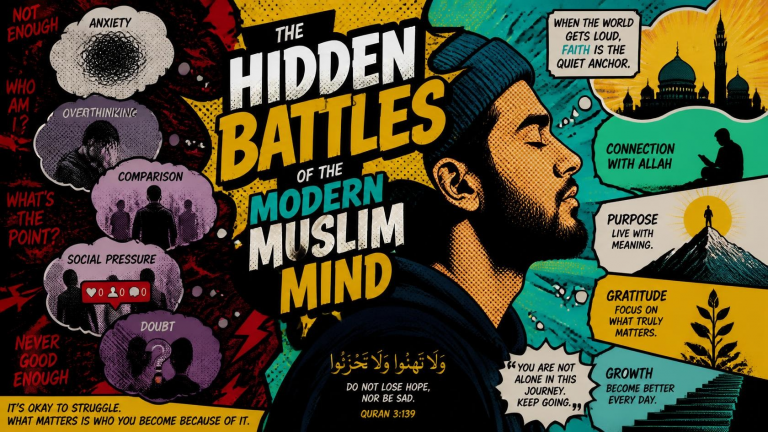

In a world flooded with information, opinions, and constant emotional pressure, clarity has become one of the rarest gifts. Many people are not confused because they lack intelligence, but because they are surrounded by noise, haste, and shallow thinking. Islam offers a better path. The Muslim is not meant to react blindly, absorb everything carelessly, or form opinions from fragments. The Qur’an and Sunnah train believers to think carefully, verify what they hear, and respond with wisdom rather than impulse. Thinking clearly is not just a mental skill in Islam — it is a spiritual responsibility.
One of the first principles of clear thinking is avoiding haste. The Prophet ﷺ taught believers not to rush into judgement or speech before understanding a matter properly. This is especially important today, when headlines, clips, and social media posts often push people to react before they reflect. A Muslim must learn to pause, investigate, and ask whether something is true, complete, and reliable before accepting it. The Qur’an itself warns against following what one does not know, which means the believer should not build views on guesswork, hearsay, or emotional pressure.
Another key to clear thinking is protecting the heart from emotional reactions that cloud judgement. Strong feelings can be useful, but they can also distort reality when they are left unchecked. Anger, envy, fear, and group pressure often make people speak too quickly and think too narrowly. Islam does not ask us to become emotionless; it asks us to become balanced. A believer should be able to feel deeply while still thinking carefully. That balance comes from taqwa, self-control, and regular reflection, because a heart connected to Allah is less likely to be dragged by every passing mood.
Clear thinking also requires depth, not shallow opinion. It is easy to repeat what others say, especially when a statement sounds confident or popular. But the Muslim is called to value knowledge, evidence, and context. Not every widely shared idea is correct, and not every strong opinion is well-grounded. Islam encourages asking better questions: What is the source? What is the full context? What does Islamic knowledge say about this? This habit protects a person from misinformation and from becoming someone who speaks about serious matters without understanding them. In a noisy world, depth is a form of protection.
Ultimately, the Muslim guide to thinking clearly is to return to revelation, humility, and deliberation. The believer does not need to know everything, but must learn how to avoid confusion by grounding the mind in truth and the heart in submission to Allah. Clear thinking grows when a person slows down, verifies carefully, controls emotion, and resists shallow certainty. That is why this way of thinking matters so much: people are desperate for clarity, and Islam offers a way to see the world with greater calm, wisdom, and confidence.