
Title: Why Muslims Don’t Read Anymore – Understanding a Cultural Shift
Muslim civilisation was built on a profound relationship with the written word. The first revealed word of the Qur’an was “Iqra” – “Read” – and for centuries Muslims responded by founding libraries, madrasas, and centres of learning from Baghdad to Timbuktu. Reading was not a hobby; it was a path to God, a social responsibility, and a marker of honour. Today, however, in many Muslim communities books are present but rarely opened, and a deep culture of reading has quietly eroded. Understanding this shift requires looking at changes in education, technology, values, and daily life.
One major factor is the transformation of education. In many Muslim-majority societies, schooling has become tightly focused on exams, credentials, and narrow career goals. Reading is often treated as a temporary hurdle on the way to a certificate, not as a lifelong habit. Students learn to memorise and reproduce information just enough to pass tests, rather than to read widely, reflect, and question. When reading is associated mainly with stress and grades, many abandon it as soon as they leave school. This clashes with the Qur’anic call to tadabbur – careful reflection – and weakens the older view of books as lifelong companions.
A second shift comes from the rise of digital entertainment. Smartphones, social media, and streaming platforms compete constantly for attention. Their design encourages fast, superficial consumption: short videos, quick posts, endless scrolling. This makes deep, sustained reading feel slow and demanding by comparison. The problem is not that Muslims are incapable of reading, but that they are continually offered easier, more stimulating alternatives. Opening an app becomes a habit that replaces opening a book.
Changing ideas of success and status also play a role. In many communities today, prestige is tied to visible wealth, beauty, or online popularity rather than knowledge and character. Scholars, teachers, and thoughtful readers are rarely celebrated as role models in the way celebrities or high-earning professionals are. Parents may push their children towards lucrative careers while giving little attention to nurturing their reading lives. When social respect is no longer connected to being well-read, the motivation to spend time with books naturally declines.
Religious life has been affected too. Qur’an recitation remains widespread, but deep engagement with its meanings, context, and implications is less common. Instead of reading tafsir, seerah, history, and spiritual classics, many rely on short clips, quotes, and simplified reminders. This weakens our ability to think carefully about the faith, weigh evidence, and navigate modern questions. Without a strong reading culture, religious discourse becomes more vulnerable to emotionalism, shallow arguments, and rigid thinking.
Economic and social pressures add further obstacles. In societies facing instability, unemployment, or long working hours, people often feel too tired to read. Books may seem like a luxury when daily survival is uncertain. Libraries are underfunded in many places, and quality books can be expensive. Families struggling with essentials rarely prioritise buying books or visiting bookshops with their children. Over time, this normalises the idea that reading is optional rather than part of a dignified life.
Language is another barrier. Many Muslims live between languages: Qur’anic Arabic, local languages, and global languages needed for study or work. If people never become fully comfortable reading in any of them, reading feels heavy and intimidating. Classical Arabic texts can seem out of reach, while modern writing in other languages can feel distant from everyday life. As a result, many turn to videos and audio content that demand less linguistic effort.
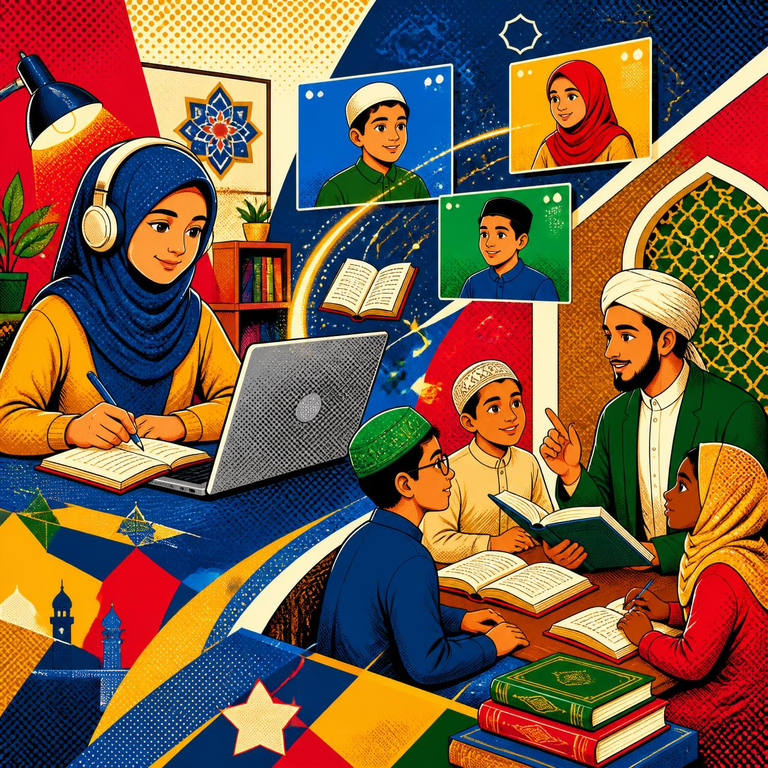
Despite these challenges, there are hopeful signs. Across the Muslim world and in the diaspora, book clubs, reading circles, and online communities around books are slowly re-emerging. Young writers are producing fiction and non-fiction that speak to contemporary Muslim experiences. Educators and publishers are experimenting with more engaging formats for children and teenagers. These efforts show that the longing for depth and serious knowledge has not disappeared.
Reviving a reading culture will require a conscious shift in values and habits. Families can reintroduce shared reading, limit screen time, and discuss ideas at home. Mosques and community centres can host reading circles, build small libraries, and invite authors and scholars. Schools can reward curiosity and critical thinking, not only memorisation. Religious leaders can model the reading life by drawing on a wide range of books and encouraging their audiences to read them.
Ultimately, the question is not only why Muslims do not read as much, but what kind of community we want to become. A people who read deeply are harder to manipulate, more able to empathise, and better prepared for complex realities. For Muslims, rebuilding a vibrant reading culture is inseparable from renewing our spiritual, intellectual, and cultural life in the age of distraction.