
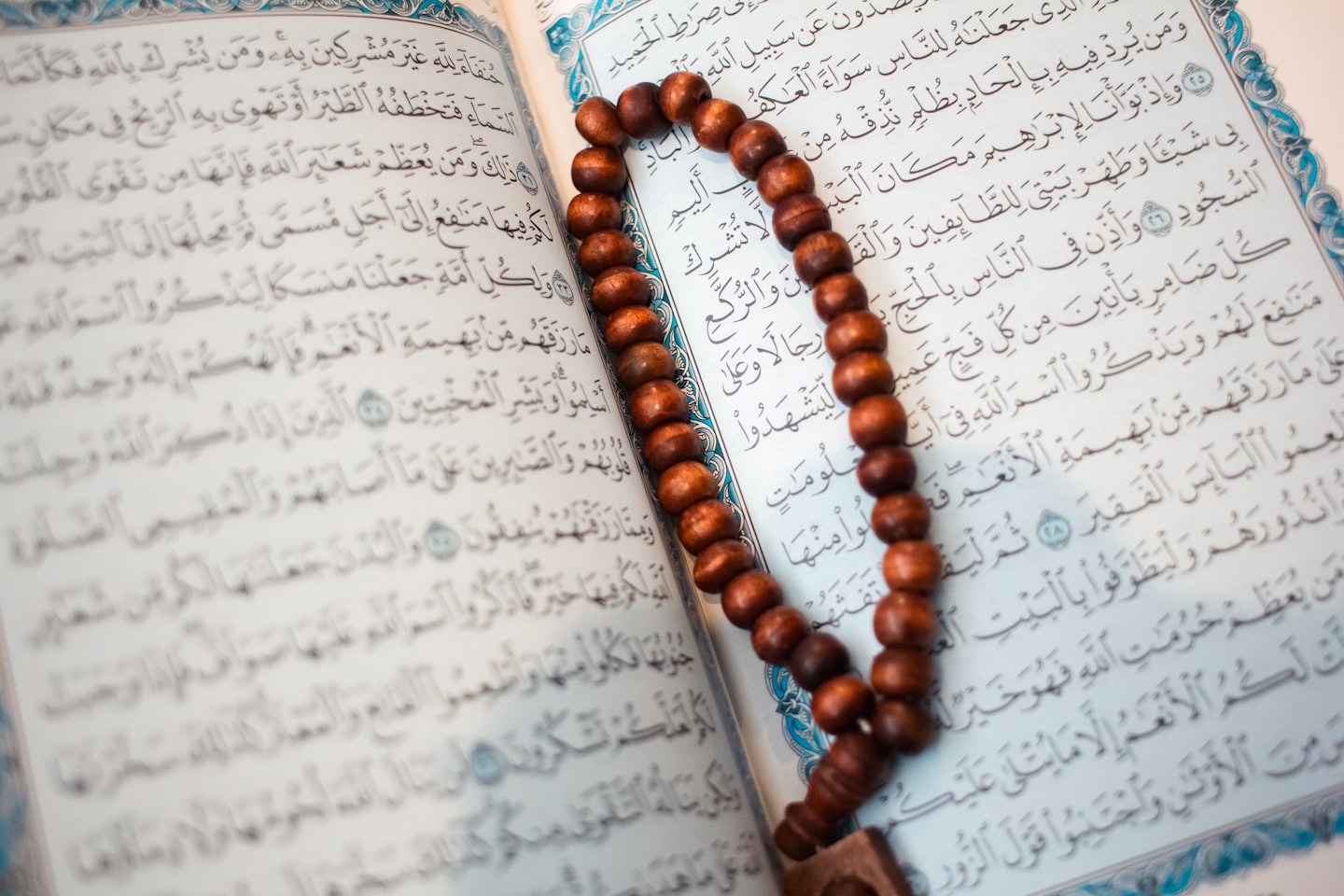
The Qur’an: Allah’s Guidance for Every Generation
The Qur’an is Allah’s final revelation to humanity. Allah revealed it to Prophet Muhammad (peace and blessings be upon him) through the Angel Jibril over approximately twenty-three years.
The Qur’an guides people towards faith, truth, justice, mercy, wisdom, and lasting success. Muslims believe that it contains the literal words of Allah. Prophet Muhammad (peace be upon him) did not write it from his own thoughts or opinions. He received the revelation, memorised it, recited it to his Companions, explained its meaning, and taught people how to live by it.
Allah says:
“This is the Book about which there is no doubt, a guidance for those conscious of Allah.”
— Qur’an 2:2
The Qur’an answers the most important questions of life. It teaches us why Allah created us, how we should worship Him, how we should treat others, and where we will return after death.
Allah says:
“I did not create jinn and mankind except to worship Me.”
— Qur’an 51:56
Worship includes prayer, fasting, charity, honesty, patience, kindness, justice, seeking knowledge, serving parents, helping those in need, and protecting people from harm. The Qur’an teaches us to make every part of life meaningful by seeking Allah’s pleasure.
The Qur’an Is the Word of Allah
Allah revealed the Qur’an as His own speech. Human beings did not invent it, improve it, or add to it. Allah promised to protect His revelation:
“Indeed, it is We who sent down the Qur’an, and indeed, We will be its guardian.”
— Qur’an 15:9
Muslims preserved the Qur’an through memorisation and writing. During the Prophet’s lifetime, his Companions memorised every verse and recorded the revelation under his supervision. The Prophet corrected their recitation and taught them the proper order of every verse and surah.
After the Prophet passed away, Abu Bakr (may Allah be pleased with him) commissioned the first complete written compilation. Zayd ibn Thabit (may Allah be pleased with him) led this work and carefully verified each verse through written records and reliable memorizers.
Later, during the leadership of ‘Uthman ibn ‘Affan (may Allah be pleased with him), official copies were prepared and distributed to major Muslim centres. This preserved the Qur’an’s unified recitation as Islam spread across different lands.
Muslims have preserved the Qur’an through two connected traditions:
- They memorise it.
- They record it.
This tradition continues today. Millions of Muslims recite the same Arabic Qur’an, regardless of their nationality or language. Translations explain the meanings, but the Arabic text remains the original revelation.
Allah says:
“Falsehood does not approach it from before it or from behind it. It is a revelation from One who is Wise and Praiseworthy.”
— Qur’an 41:42
The History of the Qur’an
Allah began revealing the Qur’an to Prophet Muhammad (peace be upon him) in Makkah when he reached the age of forty. The Angel Jibril brought the first revelation to him in the Cave of Hira:
“Read in the name of your Lord who created.”
— Qur’an 96:1
Allah revealed the Qur’an gradually over approximately twenty-three years. The Makkan revelation focused on the Oneness of Allah, faith, accountability, patience, the Day of Judgement, and the stories of earlier prophets. The Madinan revelation guided the Muslim community in worship, family life, justice, charity, business, peace, social responsibility, and community affairs.
The Qur’an responded to the challenges faced by the first Muslims, but its guidance reaches every generation. It continues to answer the needs of people who seek truth, direction, and moral clarity.
Why Should We Follow the Qur’an?
We should follow the Qur’an because Allah knows what benefits us better than we know ourselves. Human opinions change, social trends come and go, and personal desires can mislead us. Allah’s guidance gives us a firm foundation that does not depend on fashion or public opinion.
Allah says:
“Indeed, this Qur’an guides to that which is most suitable.”
— Qur’an 17:9
The Qur’an teaches us to worship Allah alone, speak truthfully, keep our promises, control our anger, honour our parents, care for the vulnerable, and avoid injustice.
Allah says:
“Indeed, Allah commands justice, excellence, and giving to relatives, and forbids immorality, bad conduct, and oppression.”
— Qur’an 16:90
When we follow this guidance, we strengthen our faith and improve our character. We also build healthier families, fairer communities, and more compassionate relationships.
Why Should We Study the Qur’an?
We should study the Qur’an because recitation becomes more powerful when we understand its message. Knowledge helps us recognise Allah’s commands, reflect upon His signs, and make better choices.
Allah says:
“Do they not reflect upon the Qur’an, or are there locks upon their hearts?”
— Qur’an 47:24
The Qur’an helps us understand:
- Our purpose in life.
- The meaning of worship.
- Our responsibilities towards parents and family.
- The importance of honesty in business.
- The proper response to hardship.
- The dangers of harmful desires.
- The path of repentance.
- The reality of death and the Hereafter.
- Our responsibility towards society.
We should study the Qur’an with humility and sincerity. We should read reliable translations, study trustworthy tafsir, and seek guidance from qualified scholars when we need clarification.
The Qur’an does more than increase our knowledge. It changes the way we think and behave. It replaces arrogance with humility, resentment with forgiveness, greed with generosity, impatience with perseverance, and heedlessness with remembrance.
Why Should We Recite and Memorise the Qur’an?
Regular recitation keeps the Qur’an close to our hearts. It reminds us of Allah, strengthens our faith, and gives us spiritual comfort during both ease and difficulty.
The Prophet Muhammad (peace be upon him) said:
“Whoever recites a letter from the Book of Allah will have one good deed for it, and each good deed will be multiplied by ten. I do not say that ‘Alif-Lam-Mim’ is a letter; rather, Alif is a letter, Lam is a letter, and Mim is a letter.”
We can recite the Qur’an after Fajr, before sleeping, during Ramadan, in prayer, or whenever we need guidance and reassurance. Even a small daily portion can produce lasting change when we read it with attention and sincerity.
Allah says:
“Those who believe and whose hearts find rest in the remembrance of Allah. Surely in the remembrance of Allah do hearts find rest.”
— Qur’an 13:28
Memorisation places Allah’s words within our hearts. It allows us to recite the Qur’an in prayer, remember its guidance throughout the day, and preserve the revelation for future generations.
We can begin with Surah Al-Fatihah, the shorter surahs, and selected verses. We should memorise gradually, revise consistently, listen to skilled reciters, and ask a qualified teacher to correct our pronunciation. Most importantly, we should learn the meaning of what we memorise.
Allah says:
“And We have certainly made the Qur’an easy for remembrance, so is there anyone who will remember?”
— Qur’an 54:17
Why Should We Apply the Qur’an?
The Qur’an should shape our actions, not remain only on our shelves, phones, or tongues. True faith appears in the way we speak, work, treat people, and respond to life’s challenges.
When the Qur’an commands honesty, we should speak truthfully. When it commands justice, we should treat people fairly. When it teaches mercy, we should forgive and show compassion. When it warns against arrogance, we should examine our hearts. When it encourages patience, we should remain steadfast.
Allah says:
“O you who believe, enter into Islam completely and do not follow the footsteps of Satan.”
— Qur’an 2:208
We apply the Qur’an when we:
- Protect our prayers.
- Speak with kindness.
- Respect our parents.
- Honour our promises.
- Deal honestly.
- Treat neighbours well.
- Control our anger.
- Protect our modesty.
- Help those in need.
- Use our time wisely.
- Respond to hardship with patience.
- Prepare for our meeting with Allah.
The Qur’an should influence every part of life, including our homes, education, work, finances, friendships, marriages, and communities.
The Qur’an Brings Healing and Hope
The Qur’an offers spiritual healing and mercy. It may not remove every difficulty immediately, but it teaches us how to face hardship with patience, hope, and trust in Allah.
Allah says:
“We send down of the Qur’an that which is healing and mercy for the believers.”
— Qur’an 17:82
The Qur’an reminds us that Allah remains near when sadness overwhelms us. It strengthens our hearts when fear troubles us, opens the door of repentance when we sin, and guides us when confusion surrounds us.
Allah says:
“Allah is the Protector of those who believe. He brings them out of darknesses into the light.”
— Qur’an 2:257
The Qur’an Builds Excellent Character
The Qur’an develops patience, forgiveness, humility, gratitude, courage, generosity, and self-control. It teaches us to care about people, speak responsibly, forgive others, and resist injustice.
The Prophet Muhammad (peace be upon him) lived according to the Qur’an. When ‘A’ishah (may Allah be pleased with her) described his character, she explained that his character reflected the Qur’an.
The Qur’an also teaches us that success does not depend only on wealth, education, appearance, physical strength, or social status. True success comes through faith, righteous action, truthfulness, patience, and sincere devotion to Allah.
Allah says:
“Successful indeed are the believers.”
— Qur’an 23:1
The Greatest Book in the World
Muslims regard the Qur’an as the greatest book in the world because Allah revealed it as guidance for all humanity. It speaks to the heart, strengthens the mind, develops the soul, protects the family, improves society, and prepares us for the Hereafter.
The Qur’an contains the stories of the prophets, lessons from earlier nations, principles of justice, guidance for personal conduct, reminders about death, descriptions of Paradise and Hell, and teachings that protect human dignity.
Human writings may contain useful ideas, but every human author has limited knowledge and experience. Allah possesses perfect knowledge, and He created humanity. His guidance therefore reaches every part of human life.
Allah says:
“Say, if mankind and the jinn gathered together to produce the like of this Qur’an, they could not produce the like of it, even if they supported one another.”
— Qur’an 17:88
The Qur’an invites us to think deeply, seek truth, and recognise its divine origin. When we approach it sincerely, it transforms our hearts, choices, families, and communities.
Building a Daily Relationship with the Qur’an
We can strengthen our relationship with the Qur’an by following a simple routine:
- Recite a portion every day.
- Learn correct pronunciation.
- Read a reliable translation.
- Study tafsir with qualified teachers.
- Memorise selected surahs and verses.
- Reflect on the lessons.
- Apply one teaching at a time.
- Listen carefully to skilled reciters.
- Teach children to respect, understand, and practise the Qur’an.
- Ask Allah to make the Qur’an the light of our hearts and the guide of our lives.
Conclusion
The Qur’an is Allah’s final revelation, His preserved word, and His guidance for humanity. Allah revealed it to Prophet Muhammad (peace and blessings be upon him), and Muslims have protected it through memorisation, writing, recitation, and teaching.
We should not read the Qur’an only during Ramadan or on special occasions. We should make it a lifelong companion. We should recite it with our tongues, understand it with our minds, accept it with our hearts, memorise it, and express its teachings through our actions.
The Qur’an teaches us how to worship, how to live with purpose, how to treat people, how to overcome hardship, and how to prepare for the Hereafter. It leads us from confusion to clarity, from fear to hope, and from darkness to light.
Allah says:
“Indeed, this Qur’an guides to that which is most suitable and gives good news to the believers who do righteous deeds that they will have a great reward.”
— Qur’an 17:9
May Allah make the Qur’an the light of our hearts, the comfort of our souls, the guide of our lives, and a witness in our favour on the Day we return to Him. Ameen.