

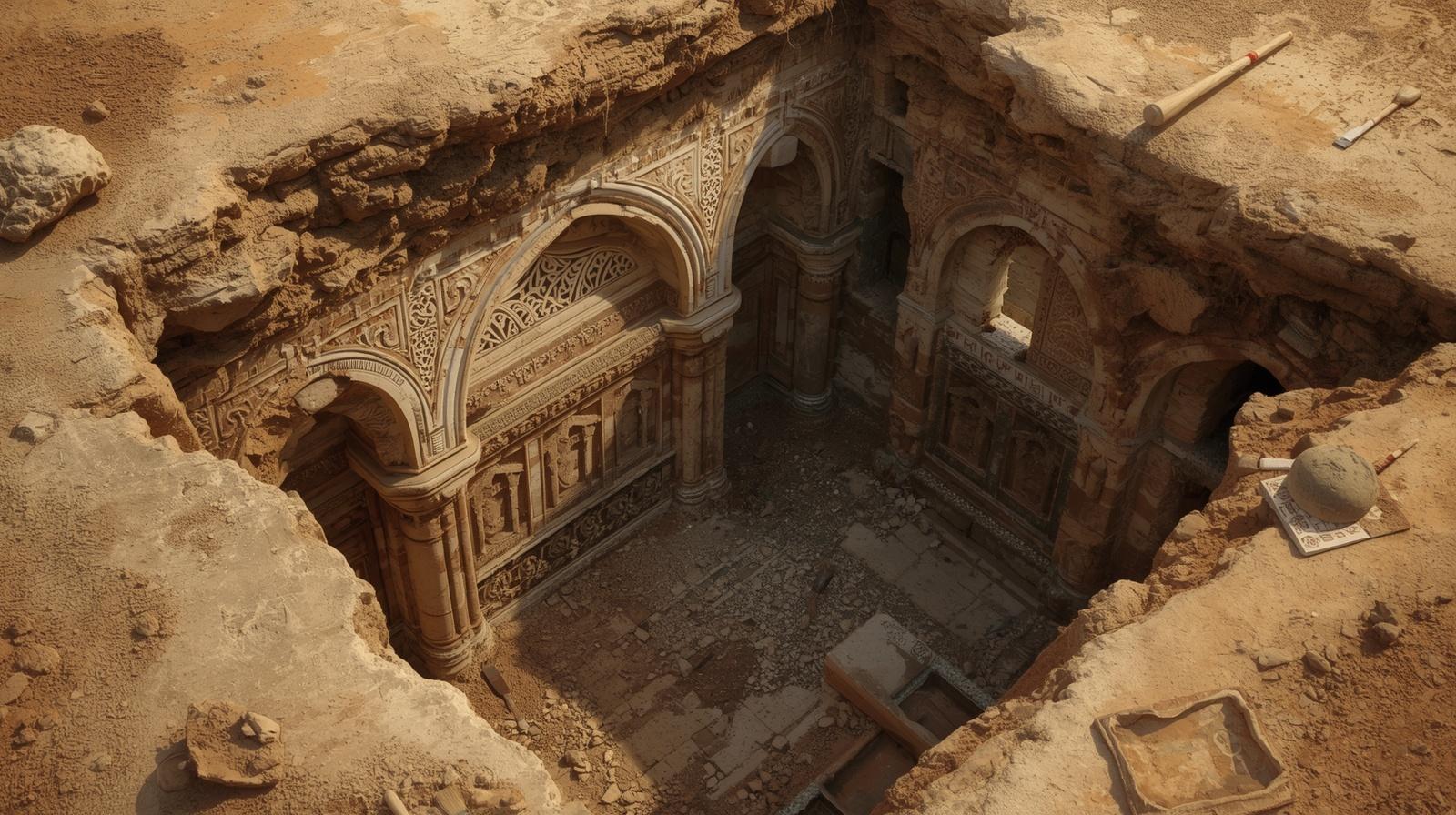
A mosque, also known as a Masjid, is a place of worship for Muslims. Typically, mosques are used for communal prayers on Friday afternoons, known as Jumu’ah or Jami. In addition to serving as places of worship, mosques symbolise tradition and architectural significance. Since medieval times, various Muslim rulers have governed the territory now known as Bangladesh, which has led to the construction of numerous palaces, mosques, and forts in the region. Today, many centuries-old historical mosques continue to showcase the grandeur of rich Islamic architecture and tradition. Let’s explore the top 10 historical mosques in our country.
Beautiful Traditional Mosques in Bangladesh
The mosque is one of the oldest in Bangladesh. It was constructed during the reign of Sultan Nasiruddin Mahmoud Shah (1435-1459) by Khan Jahan Ali. Originally built as a walkway for spectators during gatherings, it was later transformed into a complex containing sixty domed mosques. On the west wall of the mosque, there are ten mihrabs. The central mihrab is particularly tall and beautiful. To the south, there are five mihrabs, while to the north, there are four. Additionally, there is a small entrance next to the main mihrab on the northern side, which is believed to lead to another mihrab.
From north to south, the mosque is 160 feet long, 143 feet long inside, 104 feet wide from east to west, and 88 feet wide inside. The walls are approximately 8.5 feet thick. Surprisingly, the total number of domes in the sixty-domed mosque is 81, with 11 domes in seven rows, totalling 77 domes, four in each, and four in each of the four corners.
Atiya Mosque
The Atiya Mosque is located about six kilometres south of the district headquarters, in the village of Atiya in Delduar Upazila, Tangail district. Built during Emperor Jahangir’s reign by Sayeed Khan Panni, son of Baizid Khan Panni, this historic mosque was constructed in 1019 AH (1610–1611 AD) to honour Shah Baba Kashmiri.

Atiya mosque
The mosque is small, measuring 18.29 meters by 12.19 meters on the outside and 2.23 meters on the inside. The rectangular design of this heritage mosque features a square single-domed prayer hall and an additional rectangular bay on the eastern side with three smaller domes. Three arched doorways can be found on the east wall, the middle one being slightly wider than the rest. The arches have a four-centred design to them. From the passageway, three smaller entrances lead to the main prayer chamber.
The builder also excavated a large tank on the western side of the mosque. The mosque gained prominence following the arrival of the renowned saint, Shah Baba Kashmiri, who played a key role in establishing Islam in this region of Bengal. A duplicate of the inscription confirms the construction date, which is displayed above the mosque’s main entrance; this date is 1609 AD. The mosque is situated on the east side of the Louhajong River.
Be sure to check out “Top Historical Landmarks in Dhaka Remembering the Liberation War of 1971.”
Kusumba Mosque
Kusumba Mosque is named after the village of Kusumba, situated on the west bank of the Atrai River in the Manda upazila of Naogaon district. The mosque is surrounded by a walled enclosure, featuring a grand entrance and areas designated for guards.
It was constructed by a person named Sulaiman, who was likely a high-ranking official during the Afghan administration in Bengal, under one of the last Suri monarchs, Ghiyasuddin Bahadur Shah. The eastern central entrance of the building has an inscription tablet in Arabic, dating the mosque to 966 AH (1558-59 AD).

Kusumba mosque
The mosque has a rectangular shape and features three bays with two aisles on the east side and two on both the north and south sides. At the western end, the central mihrab is prominent. There are two mihrabs located at floor level, facing the central and southeastern entrances on the interior west (qibla) wall. Additionally, there is a mihrab in the northwestern bay, which is situated above a raised platform accessed by a staircase from the east.
Chhota Sona Mosque
The Chhota Sona Mosque, sometimes referred to as a “jewel of Sultanate architecture,” is located in the Firuzpur Quarters of Gaur-lakhnauti, the capital of Sultanate Bengal, some 3 kilometres south of the Kotwali Darwaza and half a kilometre southeast of the Tahkhana complex. It sits on the western end of a big tank’s southern bank. A new two-story Guest House, erected several years ago by the Department of Archaeology and Museums, Government of Bangladesh, is located a short distance west of the mosque.

Chhota Sona Mosque
Between the Guest House and the mosque, there is a modern road that appears to have older origins. This road runs north-south, connecting the main city of Gaur-Lakhnauti with its southern suburb via the Kotwali Darwaza. The mosque was established by Majlis-al-Majalis, Majlis Mansur Wali Muhammad bin Ali, as indicated by an inscription tablet that is still affixed above the central entryway.
Sultan Alauddin Husain Shah’s name shows that the mosque was constructed during his reign (899-925 AH/ 1493-1519 AD).
Bagha Mosque
Bagha Mosque, situated in Bagha, approximately 40 kilometres southeast of Rajshahi, is in fairly good condition. The mosque was built on the western bank of a large tank, enclosed within a brick-walled courtyard measuring 48.77 meters square meters. Visitors can enter the mosque compound through two historic arched gateways: one located to the north and the main one to the south, each featuring a simple rectangular curved design with turrets on either side.
Octagonal towers, separated into pieces by moulded bands and crowned with polygonal solid cupolas, emphasize the building’s four exterior angles. The building’s cornice is gently curled in the Bengali style.
On the east side of the mosque, there are five arched openings, while the south and north sides each have two arched openings. At the western end of the three southern bays, there are three mihrabs, with a panelled design in the fourth bay. Additionally, a smaller mihrab is situated in the raised gallery in the northwestern corner of the mosque. The interior of the mosque is divided into two longitudinal aisles and five bays by a row of four stone pillars.rs divides the mosque’s interior into two longitudinal aisles and five bays.

Bagha Mosque
As a result, the mosque is divided into ten distinct square sections, each topped with an inverted cup-shaped dome. Following the collapse of the old roof during the 1897 earthquake, the archaeological department restored the current domed ceiling.
Sura Mosque
Sura Masjid, also known as Surmya Masjid or Shuja Masjid, is located 10 kilometres west of Ghoraghat Upazila in the Dinajpur district, next to the old depot along the Ghoraghat-Hili road. The mosque measures 12.12 meters by 7.87 meters.
Its main hall features minarets on each of the four corners, along with two additional carvings at the corners of the verandah. These details are crafted from black stone. Three doors lead out to the courtyard and the eastern wall of the main hall. Above the main room, there is a dome, and three smaller domes sit above the porch.
.png)
Sura mosque
Inside, the mihrabs on the west wall are of the highest quality. Within the mosque, the use of stone with bricks, the stone pillars in the middle of the partitions, and the brick masonry are all striking. Furthermore, each door has a stone door beneath it. From the east, there is a staircase that leads to the mosque. The remnants of this antiquity are thought to be no older than the Gupta period.
Darasbari Mosque
A famous example of Muslim Bengal architecture is the Darasbari Mosque. In Shibganj Upazila of Chapainawabganj district, between Omarpur and Kotwali Darwaza, in the midst of Chhota Sona Mosque and Kotwali Darwaza.
On the Indo-Bangladesh border, the mosque is located. It is the largest mosque in Gaur-Bangladeshi Lakhnuti’s section. The mosque was built in 1469 AD (64 AH) under the reign of Sultan Shams Uddin Yusuf Shah, according to an Arabic engraving uncovered by Munshi Elahi Bakhsh during a power study (engraving size 11 toes 3 inches, width 2 toes 1 inch).

Darasbari Mosque
The mosque was originally called the Firozpur Mosque. However, when Sultan Hussain Shah built the University of Darusbari in 1502 AD, both the mosque and the surrounding area became known as Darusbari. The term “Dars” means “lesson.” Likely, a madrasa was once attached to the mosque in this location. General Cunningham referred to it as Darasbari or College in his writings
Khania Dighi Mosque
This mosque is also known as the Rajbibi Mosque. The literal meaning of the word ‘rajbibi’ is royal lady. This suggests that this mosque was constructed at Gaur-Chapainawabganj by a powerful member of a ruler’s family. Because no inscription has been assigned, the year of founding cannot be determined. It is a modest mosque standing on the western bank of historical Khania Dighi. The structure’s east-west direction indicates that it was dug by a Muslim king. The mosque is one of a collection of buildings with a square-shaped design and a fore-room.
A semicircular dome encircles the main prayer chamber. The extrados of this dome has been restored as a smooth surface, although it can be presumed that the extrados of the dome had a succession of bands from seeing the different examples in Gaur and the images before restoration. All of the walls are made of bricks, with a stone layer at the plinth level and another at the lintel level. A stone layer was added to the mid-level of all the corner turrets during rebuilding. Only the Qibla wall is surrounded by stones from the inside.

Khania Dighi Mosque or Rajbibi Mosque
There are six octagonal turrets at the corners: four in the main hall and two in the fore-room. These turrets feature terracotta brick mouldings with lozenge impressions at the base, along with a terracotta frieze in the interspaces.
Star Mosque
The Star Mosque is situated in the historic area of Dhaka City, on Abdul Khairat Road in Armanitola. There is no inscription on the mosque indicating its construction date. It is believed to have been built by Mirza Golam Pir, whose ancestors moved to Dhaka. As Mirza Golam Pir’s death can be traced to 1860, the mosque was likely constructed in the first half of the nineteenth century.
It was originally a three-domed oblong mosque (10.06m x 4.04m). The Qibla wall has three mihrabs in accordance with the mosque’s three doors, the central one being larger than the side ones. In 1926, a local businessman named Alijan Bepari constructed a porch on the mosque’s eastern side, nearly tripling its breadth without affecting the mosque’s original form.
On the verandah’s eastern face, five arches were built on four pillars. He also paid for the resurfacing with beautiful and vibrantly colored varied pattern tiles. The three-domed mosque was converted to a five-domed mosque in 1987. The mosque’s current length and width are 21.34m and 7.98m, respectively. The plan was altered slightly, with one mihrab removed and two additional domes, and three new mihrabs built. The mosque is entered through five arched doors.
Goaldi Mosque
The Goaldi Mosque is a mosque in Sonargaon, the historic Bengali capital. It was constructed during the Bengal Sultanate, under the rule of Sultan Alauddin Hussain Shah. It is one of the few remaining medieval monuments in Sonargaon Upazila, Bangladesh.
In 1519, the mosque was built. During the time of Sultan Alauddin Husain Shah of Bengal, Mulla Hizabar Akbar Khan built it near Goaldi, half a mile northeast of Panam village in Sonargaon. The Goaldi mosque is an example of a Bengali ‘enclosed square type’ mosque, with a cubical prayer chamber, corner towers, and entrances on all sides save the qibla wall.
The mosque is topped by a single dome, with engaged ribbed turrets defining the four corners and a gently sloping cornice. Circular corner towers differ from the more common octagonal corner towers. In the Dhaka district, this is the unique example of circular corner towers. A row of miniature niches with floral designs inside complements the cornice.
We have discussed the top 10 historical mosques in Bangladesh. In addition to these mosques, there are many other traditional mosques located throughout the country. These mosques serve as reminders of our rich history and culture.