

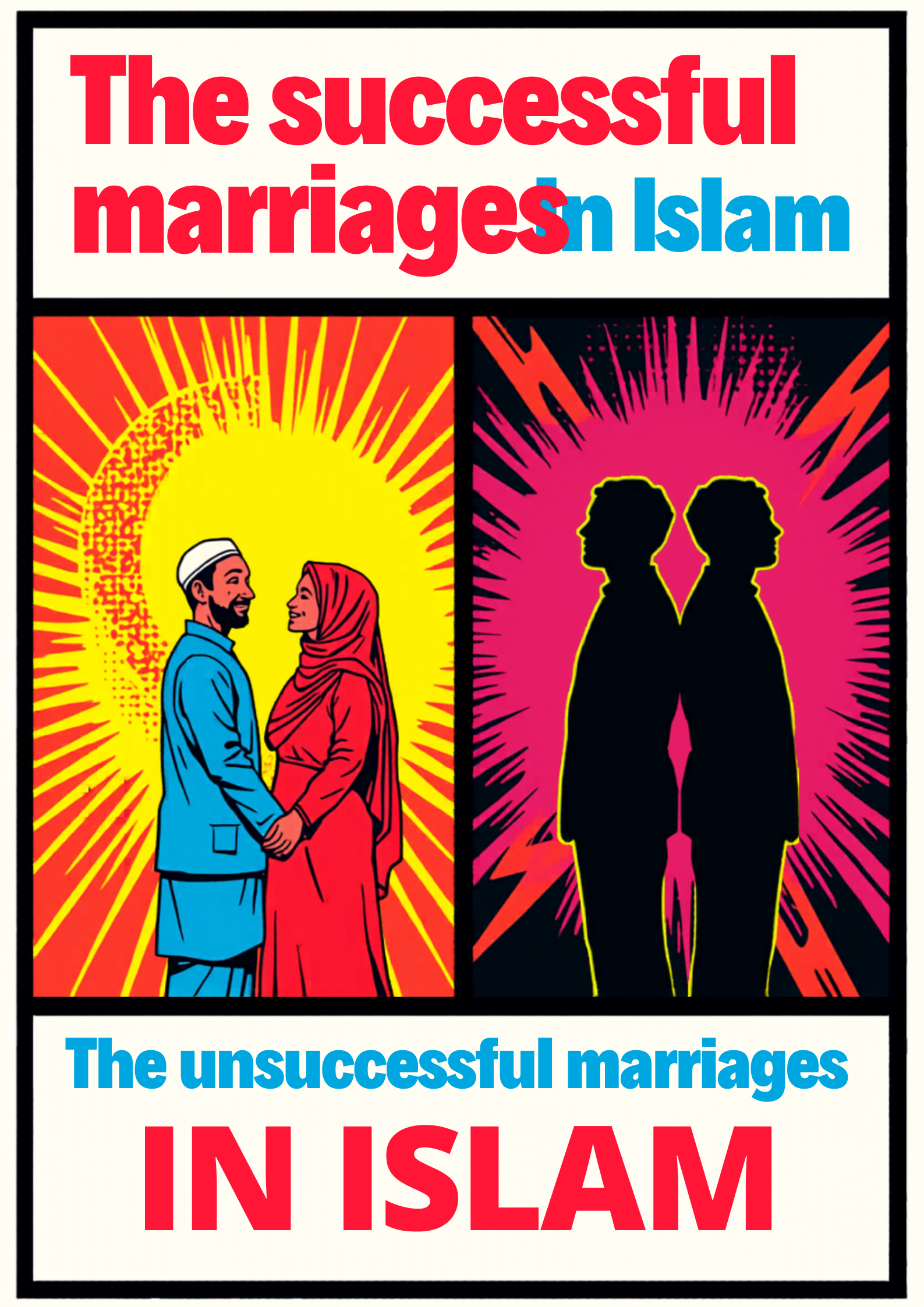
In Islam, marriage is an act of worship through which a person completes half of their religion and meets Allah in a pure and honoured state. It is the foundational unit of the Muslim community.
Allah created us with a natural inclination: when a man and a woman mature, they desire to connect. This physical and psychological drive serves not only the individuals but humanity as a whole. Out of mercy, Allah taught us how to regulate this instinct in the best way so we can avoid harm and enjoy its benefits.
Through Islam, Allah revealed guidance for every aspect of life-including, in great detail, marriage.
In this article, we will cover:
What marriage is in Islam
The rights of men and women in Islamic marriage
The shared rights of both spouses
The conditions of a valid marriage in Islam
The main steps to consummate a marriage in Islam
Why marriage is important in Islam
The purpose of marriage in Islam
Types of marriage in Islam: lawful and unlawful
When marriage becomes obligatory and when it is not
What is Marriage in Islam?
In Islam, marriage is a contract exclusively between a man and a woman. Through it, each spouse gains specific rights and assumes specific responsibilities.
Beyond its legal nature, marriage establishes a deep emotional, spiritual, and practical bond between husband and wife. It becomes the nucleus of a healthy family built on compassion, respect, and cooperation.
يَـٰٓأَيُّهَا ٱلَّذِينَ ءَامَنُوٓا۟ أَوْفُوا۟ بِٱلْعُقُودِ
O you who have believed, fulfill [all] contracts. (Qur’an 5:1)
Rights of Men and Women in Islamic Marriage
Islamic marriage is designed to protect the rights of both spouses. These rights are balanced with corresponding duties.
Rights of the Wife over Her Husband
Dowry (Mahr)
The husband must give his wife a dowry with monetary value or something the couple mutually agrees upon. The husband has no right to reclaim any part of it unless the wife freely and happily agrees.
Financial Maintenance (Nafaqah)
The husband is obliged to provide for his wife’s basic needs: food, clothing, suitable housing, and her everyday living expenses according to his means.
Non‑neglect and Companionship
The husband should not desert or neglect his wife. Traditionally, scholars mentioned that he should not leave her for long periods (such as more than four months) without excuse and should maintain regular marital life when present.
Rights of the Husband over His Wife
Leadership (Qiwāmah)
The husband has leadership in the household, which comes with responsibility and accountability before Allah. The wife is expected to follow his lead in what is permissible and reasonable. For example, she should not allow someone into his home or undertake actions affecting the family without his knowledge when such matters fall under his responsibility.
Obedience in Permissible Matters
As long as the husband does not command anything that conflicts with Allah’s law, the wife should obey him in what is reasonable. In turn, he must not oppress, humiliate, or abuse her.
Safeguarding Honour and Property
The wife must safeguard her modesty, her husband’s honor, and his wealth in his absence.
Shared Rights of Both Spouses
Some rights in marriage belong equally to both the husband and wife:
Mutual Sexual Fulfilment
Intimacy becomes lawful only within marriage. Each spouse should help the other fulfill this natural need. The wife should not refuse without a valid excuse, and the husband must not withhold or neglect his wife’s needs.
Kind, Respectful Treatment
Both spouses must treat each other with gentleness, respect, and good manners. The husband cannot mistreat or burden the wife unfairly, and the wife must show respect, cooperation, and good character towards her husband.
Concealing and Protecting One Another
Each spouse should protect the other’s secrets, cover their faults, and be patient with their shortcomings. They should not expose each other’s private matters to others unnecessarily.
Inheritance
Husband and wife inherit from each other upon death. The detailed shares are defined in the laws of Islamic inheritance.
Responsibility Towards Children
If Allah blesses them with children, both parents are responsible for their upbringing, care, education, and guidance.
A righteous, pious wife brings happiness, joy, and brightness to her household. A righteous, pious husband protects and leads his family and preserves it.
The Prophet Muhammad (PBUH) described marriage as a form of worship that brings a couple closer to their Creator and earns them many rewards. He even described marriage as half of the religion.
Allah says:
“And women have rights similar to what is expected of them, according to what is reasonable. But the men have a degree over them. And Allah is Exalted in Might and Wise.” (Qur’an 2:228)
وَلَهُنَّ مِثْلُ ٱلَّذِى عَلَيْهِنَّ بِٱلْمَعْرُوفِ ۚ وَلِلرِّجَالِ عَلَيْهِنَّ دَرَجَةٌۭ ۗ وَٱللَّهُ عَزِيزٌ حَكِيمٌ
Conditions of Marriage in Islam
For a marriage to be valid in Islam, five key conditions must be met:
Clear Identification of the Spouses
Each spouse must be clearly identified, either by name or an unambiguous description (e.g. “my eldest daughter”).
Mutual Consent
Both the man and the woman must freely consent to the marriage. A marriage without consent is invalid.
Wali (Guardian) for the Woman
The woman must have a legal guardian, usually her father, then her eldest brother, then the closest male relative. If she has no such relatives, the Islamic judge acts as her wali. The Prophet (PBUH) stated that there is no marriage without a wali.
Two Reliable Witnesses
At least two adult, sane, trustworthy Muslim men must witness the marriage contract.
No Prohibited Degree of Kinship
The spouses must not be mahram (permanently forbidden to marry) to one another. The Qur’an explains who is mahram. For instance, cousins are not mahram to each other and may marry.
If any of these conditions are missing, the marriage is invalid.
Marriage in Islam: 3 Main Steps
The process of concluding a marriage contract in Islam involves three main steps:
Offer (Ijāb) by the Wali
Example: The father says, “I marry you to my eldest daughter.”
Acceptance (Qabūl) by the Groom
The groom responds, “I accept the marriage to your eldest daughter.”
Public Announcement
The marriage must be known and not hidden. At minimum, two witnesses must be present, and the news should be shared within the community.
These are called the arkān (pillars) of the marriage contract. Once the first two steps are completed in front of witnesses, the contract is valid. Publicizing the marriage completes the social dimension and prevents secrecy.
Marriage is concluded by spoken words, just as divorce can occur through words. Islam gives great weight to a person’s word; honoring promises and contracts is a highly valued virtue. Because of this, Allah made a binding contract the basis of the marriage relationship.
Why is Marriage So Important in Islam?
Marriage is crucial because it:
Protects the rights of men, women, and children
Provides a stable environment for reproduction and upbringing
Builds strong families, which in turn build a healthy society
Allah says:
“O mankind, indeed We have created you from male and female and made you peoples and tribes that you may know one another. Indeed, the most noble of you in the sight of Allah is the most righteous of you. Indeed, Allah is Knowing and Aware.” (Qur’an 49:13)
يَـٰٓأَيُّهَا ٱلنَّاسُ إِنَّا خَلَقْنَـٰكُم مِّن ذَكَرٍۢ وَأُنثَىٰ وَجَعَلْنَـٰكُمْ شُعُوبًۭا وَقَبَآئِلَ لِتَعَارَفُوٓا۟ ۚ إِنَّ أَكْرَمَكُمْ عِندَ ٱللَّهِ أَتْقَىٰكُمْ ۚ إِنَّ ٱللَّهَ عَلِيمٌ خَبِيرٌۭ
Allah created men and women and prepared each to fulfil complementary roles. He commanded us to connect with one another in a lawful way. Marriage provides a clear framework that regulates the relationship and protects everyone’s rights.
He also established the family as the heart of society, safeguarded by a mother’s nurturing care and a father’s protective affection. Such a family produces citizens who know their duties and rights, serve their religion, and contribute positively to their communities.
Allah says:
“O mankind, fear your Lord, who created you from a single soul and created from it its mate, and dispersed from both of them many men and women. And fear Allah, through whom you ask one another, and the wombs. Indeed, Allah is ever, over you, an Observer.” (Qur’an 4:1)
يَـٰٓأَيُّهَا ٱلنَّاسُ ٱتَّقُوا۟ رَبَّكُمُ ٱلَّذِى خَلَقَكُم مِّن نَّفْسٍۢ وَٰحِدَةٍۢ وَخَلَقَ مِنْهَا زَوْجَهَا وَبَثَّ مِنْهُمَا رِجَالًۭا كَثِيرًۭا وَنِسَآءًۭ ۚ وَٱتَّقُوا۟ ٱللَّهَ ٱلَّذِى تَسَآءَلُونَ بِهِۦ وَٱلْأَرْحَامَ ۚ إِنَّ ٱللَّهَ كَانَ عَلَيْكُمْ رَقِيبًۭا
Unlike animals, which are guided only by instinct, humans are honored with reason and free will. When it comes to reproduction, we share the same basic instinct, but Allah ordered us to regulate it and place it within the noble system of marriage so that it can lead to higher moral and spiritual goals.
The Purpose of Marriage in Islam
The main purpose of marriage is to:
Establish a stable, loving, and secure family
Protect the rights of husband, wife, and children
Provide a framework for mercy, affection, and mutual support
Sexual pleasure is a secondary purpose-more like a reward for fulfilling the main objective. In relationships outside marriage, this order is often reversed, with pleasure made the main objective and rights and responsibilities neglected.
Many moral and social problems in modern societies originate from the breakdown of the family and the weakening of marriage.
Allah says:
“And of His signs is that He created for you from yourselves mates that you may find tranquility in them; and He placed between you affection and mercy. Indeed, in that are signs for a people who give thought.” (Qur’an 30:21)
وَمِنْ ءَايَـٰتِهِۦٓ أَنْ خَلَقَ لَكُم مِّنْ أَنفُسِكُمْ أَزْوَٰجًۭا لِّتَسْكُنُوٓا۟ إِلَيْهَا وَجَعَلَ بَيْنَكُم مَّوَدَّةًۭ وَرَحْمَةً ۚ إِنَّ فِى ذَٰلِكَ لَـَٔايَـٰتٍۢ لِّقَوْمٍۢ يَتَفَكَّرُونَ
Types of Marriages in Islam
Islam recognizes two broad categories of marriage:
Lawful (Valid) Marriage
Unlawful (Invalid/Prohibited) Marriage
1. Lawful Marriage in Islam
Marriage is, at its core, a contract. Different forms of valid marriage exist, provided they do not contradict the commands of Allah or the essential aims of marriage.
Examples:
Misyar Marriage
A marriage in which one or both spouses give up certain non‑essential rights (such as the wife giving up regular overnight stays or part of her financial rights) by mutual consent, while the basic pillars and conditions of marriage remain intact.
‘Urfi Marriage (Valid Form)
A marriage that fulfills all Islamic requirements—wali, witnesses, consent—and is not completely secret, but which is not formally registered with the courts or civil authorities. Such a marriage can be valid Islamically, but legal rights may be harder to enforce in state courts.
There is also an invalid form of ‘urfi marriage: one that is secretive, lacks a wali or proper witnesses, or is hidden from those who are entitled to know. This type is unlawful in Islam.
2. Unlawful Marriage in Islam
Some forms of “marriage” that appear in different cultures or legal systems are not recognized as valid by Islamic law.
Examples include:
Secret Marriage
Lacking proper witnesses, hidden in a way that denies spouses and children their rights.
Polyandry
A woman being married to multiple men at the same time.
Temporary Marriage for a Fixed Time
Contracts made with a clearly defined end date.
Forced Marriage
One or both parties are compelled into the marriage without genuine consent.
Most Interfaith Marriages
Generally, only a Muslim man marrying a chaste Jewish or Christian woman is recognized; other combinations are not valid.
Same‑Sex Marriage
Marriage between two men or two women is not recognised.
Marriage with Declared Intent of Divorce
A contract in which one or both parties write or state from the outset that they will divorce after a certain time.
Un‑Islamic or Ritualistic Forms
Marriages conducted with rituals that contradict Islamic belief (for example, mixing blood, or ceremonies centered on altars or purely secular courts that disregard Islamic law in the actual contract).
Is Marriage a Must in Islam?
Whether marriage is a personal obligation depends on one’s circumstances.
Islamic law categorizes marriage under the five general rulings:
Forbidden (Harām)
When a specific marriage is unlawful (such as marrying a mahram relative or entering an invalid form of marriage) or when one cannot fulfill essential rights—like complete inability to have marital relations, in a situation where that will clearly wrong the other spouse.
Disliked (Makrūh)
When there is no genuine need for marriage and there is reasonable concern about failing to fulfill marital responsibilities.
Permissible (Mubāḥ)
When a person is able to marry and fulfill rights, but does not feel a strong need or fear of falling into sin if they remain single.
Recommended (Mandūb / Mustaḥabb)
When there is a desire for marriage and clear benefit in it, but remaining unmarried would not likely lead to ḥarām.
Obligatory (Wājib / Farḍ)
When a person has the physical and financial means to marry and genuinely fears falling into forbidden relationships if they do not. In this case, marriage becomes a duty.
Many people hesitate to marry due to fear—fear of responsibility, financial burden, or emotional challenges. Knowing these rulings helps put those fears into perspective and shows when marriage is strongly encouraged or even required.
If you want to explore more about marriage, women’s status in Islam, or general relationship advice from an Islamic perspective, continue reading and consider subscribing for future articles.
Allah says: “And women have rights equal to their obligations in accordance with what is fair. And men have a degree over them, for Allah is Almighty, All-Wise.”
وَلَهُنَّ مِثْلُ ٱلَّذِى عَلَيْهِنَّ بِٱلْمَعْرُوفِ ۚ وَلِلرِّجَالِ عَلَيْهِنَّ دَرَجَةٌۭ ۗ وَٱللَّهُ عَزِيزٌ حَكِيمٌ Surah Baqarah 228