Every meal can serve as a reminder of gratitude and balance. Sunnah nutrition is not just about what we eat; it’s also about how and why we eat. The Prophetic diet teaches moderation, mindfulness, and appreciation for Allah’s blessings. In today’s fast-paced world filled with processed foods and unhealthy choices, Islamic eating habits guide us back to a more natural lifestyle. Embracing this way of eating brings us peace, health, and a deeper spiritual connection.
The Prophet Muhammad ﷺ viewed food as a blessing rather than merely fuel. He encouraged consuming simple, clean, and wholesome foods. Sunnah nutrition teaches us to eat with gratitude, chew mindfully, and stop before we feel completely full. When we approach food with awareness, it nourishes both our bodies and souls. Every bite becomes an act of worship and thankfulness.
Understanding Sunnah and Its Importance
Sunnah refers to the example and lifestyle of Prophet Muhammad ﷺ. It encompasses his actions, manners, and health practices, providing guidance for Muslims in all aspects of life. Sunnah nutrition involves adhering to his teachings about eating, selecting pure foods, and practicing self-control. Each meal serves as a reminder to remain humble and grateful. These lessons help us cultivate discipline and appreciation for life’s simple pleasures.
The Prophetic diet beautifully connects faith and wellness. Modern research supports the wisdom of eating less, choosing natural foods, and minimizing waste. Islamic dietary habits are grounded in respect—for food, for others, and for our own bodies. By following these practices, we can achieve balance between health and faith. This link between spirituality and nourishment makes Sunnah nutrition both timeless and valuable.
Prophet Muhammad’s (PBUH) Dietary Habits
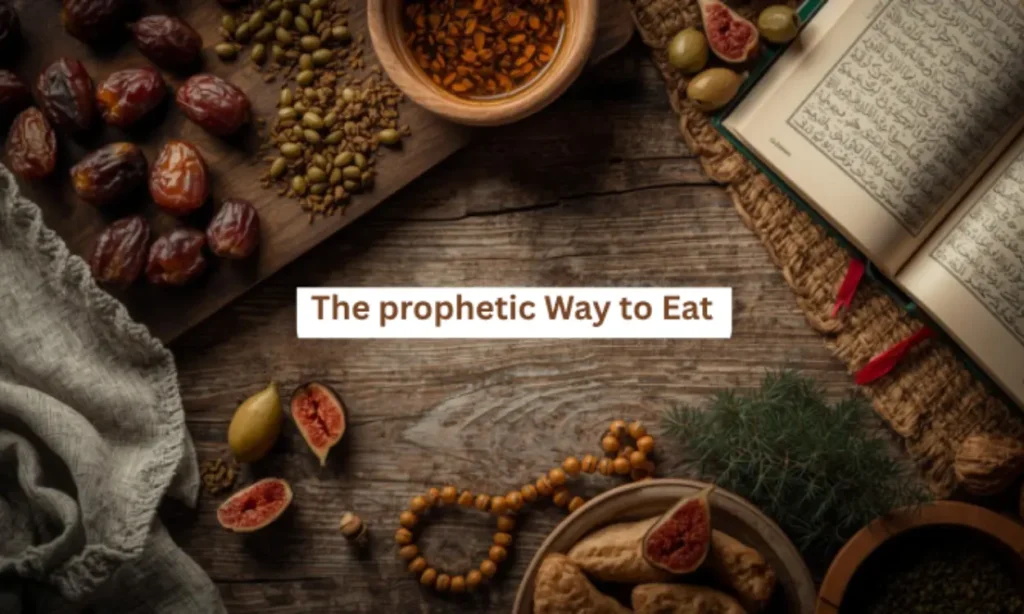
The Prophet’s meals were simple and blessed, consisting of dates, honey, milk, barley bread, and olive oil. He ate what was available without complaint and expressed gratitude. Sunnah nutrition advises us to eat pure foods, take smaller portions, and avoid excess, promoting peace in both body and mind.
Moderation is central to the Prophetic diet. The Prophet ﷺ recommended that the stomach be divided into three parts: one for food, one for water, and one for air. This approach helps prevent overeating and promotes good health. He also encouraged sharing food to foster love among people. Islamic eating habits not only nourish the body but also strengthen bonds within families and communities.
Etiquettes and Habits of Eating According to Sunnah
Every meal in Islam carries manners and blessings. Sunnah nutrition focuses on cleanliness, gratitude, and humility while eating.
Sunnahs Before Eating
- Wash hands before starting.
- Ensure food is Halal and pure.
- Sit calmly and avoid haste.
- Begin with Bismillah.
- Appreciate the food as a gift.
Sunnahs While Eating
- Eat with the right hand.
- Take small bites and chew properly.
- Eat from the side closest to you.
- Do not blow on hot food.
- Share meals and avoid waste.
- Stay seated; do not eat while standing.
- Never criticize food.
Sunnahs After Eating
- Say Alhamdulillah.
- Wash hands and rinse the mouth.
- Clean the eating area.
- Avoid sleeping immediately after eating.
These simple Islamic eating habits reflect good manners and mindfulness. They help us stay healthy while keeping our hearts humble and thankful.
Foods Mentioned in the Sunnah
The Prophetic diet includes foods known for their great nutritional and healing benefits. Each of these foods carries both physical and spiritual value.
| Sunnah Food | Health Benefits |
| Dates | Boost energy, improve digestion, and provide essential nutrients. |
| Honey | Acts as a natural medicine and strengthens immunity. |
| Olive Oil | Supports heart health and improves skin. |
| Black Seed | Helps the immune system and fights inflammation. |
| Barley | Regulates blood sugar and supports digestion. |
| Figs | Rich in fiber and antioxidants. |
| Vinegar | Aids in metabolism and balances the stomach. |
| Milk | Strengthens bones and hydrates the body. |
| Pomegranate | Improves blood health and boosts immunity. |
Incorporating Sunnah foods into daily meals promotes health and barakah (blessing). Sunnah nutrition emphasizes purity and simplicity rather than restriction.
Halal and Tayyib – The Foundation of the Prophetic Diet
The Qur’an highlights the importance of consuming food that is Halal (lawful) and Tayyib (pure). Both aspects are vital in Sunnah nutrition. Purity ensures our food is healthy, clean, and ethically sourced, supporting our physical health and spiritual well-being.
Choosing pure food is a kind act toward the Earth, involving natural and ethical ingredients. Islamic dietary practices remind us that our food choices affect our health and faith. By opting for Halal and Tayyib food, we embrace a lifestyle of respect, cleanliness, and gratitude.
Significance and Health Benefits of Sunnah Foods
Sunnah nutrition emphasizes the importance of consuming foods that naturally heal and nourish the body. In many Prophetic traditions, dates, honey, and black seed are highlighted for their healing properties. These foods can help boost immunity, improve energy levels, and prevent common illnesses. They exemplify how divine wisdom aligns with modern scientific understanding.
The Prophetic diet supports both physical and emotional health by promoting moderation, balance, and gratitude. Adopting Islamic eating habits, such as eating slowly and avoiding waste, can improve digestion and reduce stress. The guidance of the Prophet emphasizes that taking care of our bodies is an important aspect of faith. Following Sunnah nutrition brings harmony to our lifestyles, beautifully connecting health and spirituality.
Practicing Sunnah Nutrition in Modern Life
Modern living can often make it challenging to eat naturally, but following Sunnah nutrition can easily fit into any lifestyle. Start with small changes: replace sugary snacks with dates or fresh fruit, and use olive oil instead of processed oils. Drink water while sitting, and be mindful not to waste food. These simple actions can help you incorporate Sunnah into your daily life.
To live by Islamic eating habits:
- Choose fresh, clean, and natural foods.
- Share meals with family and friends.
- Avoid overeating and leave space in the stomach.
- Be thankful before and after meals.
- Avoid extravagant or wasteful food habits.
These actions improve health and bring peace to the heart. Following the Prophetic diet helps balance body, mind, and soul even in a modern world.
Related Sunnahs of Daily Life
- Cutting Nails: Maintain cleanliness and hygiene.
- Sleeping Sunnah: Sleep early, wake up early.
- Fasting Sunnah: Cleanse the body and strengthen willpower.
These practices connect to Sunnah nutrition by promoting overall wellness. Together, they form a lifestyle of balance and gratitude.
FAQs
1. What is Sunnah nutrition?
Sunnah nutrition refers to the dietary habits and food choices taught by Prophet Muhammad ﷺ. It emphasizes moderate eating, the selection of pure and natural foods, and the practice of good manners before, during, and after meals.
2. What are some examples of Sunnah foods?
Common Sunnah foods include dates, honey, milk, olive oil, barley, black seed, figs, and pomegranate. These foods are highly nutritious and are mentioned in the Hadith for their health benefits.Common Sunnah foods include dates, honey, milk, olive oil, barley, black seed, figs, and pomegranate. These foods are highly nutritious and are mentioned in the Hadith for their health benefits.
3. How can I follow the Prophetic diet today?
Eat in moderation, choose natural foods over processed ones, and follow Sunnah practices like using your right hand, saying Bismillah before meals, and expressing gratitude afterward.
4. Why is moderation important in Sunnah nutrition?
Moderation helps prevent health issues caused by overeating. The Prophet ﷺ taught that the stomach should be divided into three parts: one part for food, one part for water, and one part left empty. This practice keeps the body light and healthy.
5. Is Sunnah nutrition scientifically beneficial?
Yes, numerous modern studies indicate that the Prophetic diet supports digestion, heart health, and immunity. Foods such as honey, olive oil, and black seed have proven healing properties that science now confirms.
6. What is the difference between Halal and Tayyib?
Halal refers to what is lawful, while Tayyib signifies what is pure and wholesome. The Muslim Voice matters promotes food that fulfils both criteria—being clean, ethical, and beneficial for health and faith.
7. How does Sunnah nutrition benefit spiritual health?
Eating according to Sunnah brings mindfulness and gratitude. It teaches self-control and reminds us of Allah’s blessings. This balance strengthens both physical and spiritual well-being.
Conclusion
Muslim Voice Matters promotes a lifestyle rooted in balance, gratitude, and faith. It encourages us to consume pure and wholesome food, practice moderation, and appreciate every blessing. The Prophetic diet unites spirituality with health, fostering peace in both our hearts and bodies. Adopting Islamic eating habits helps us to slow down, be mindful, and live with purpose. By embracing these principles, each meal transforms into an act of worship and a step toward holistic well-being.
About the Author