
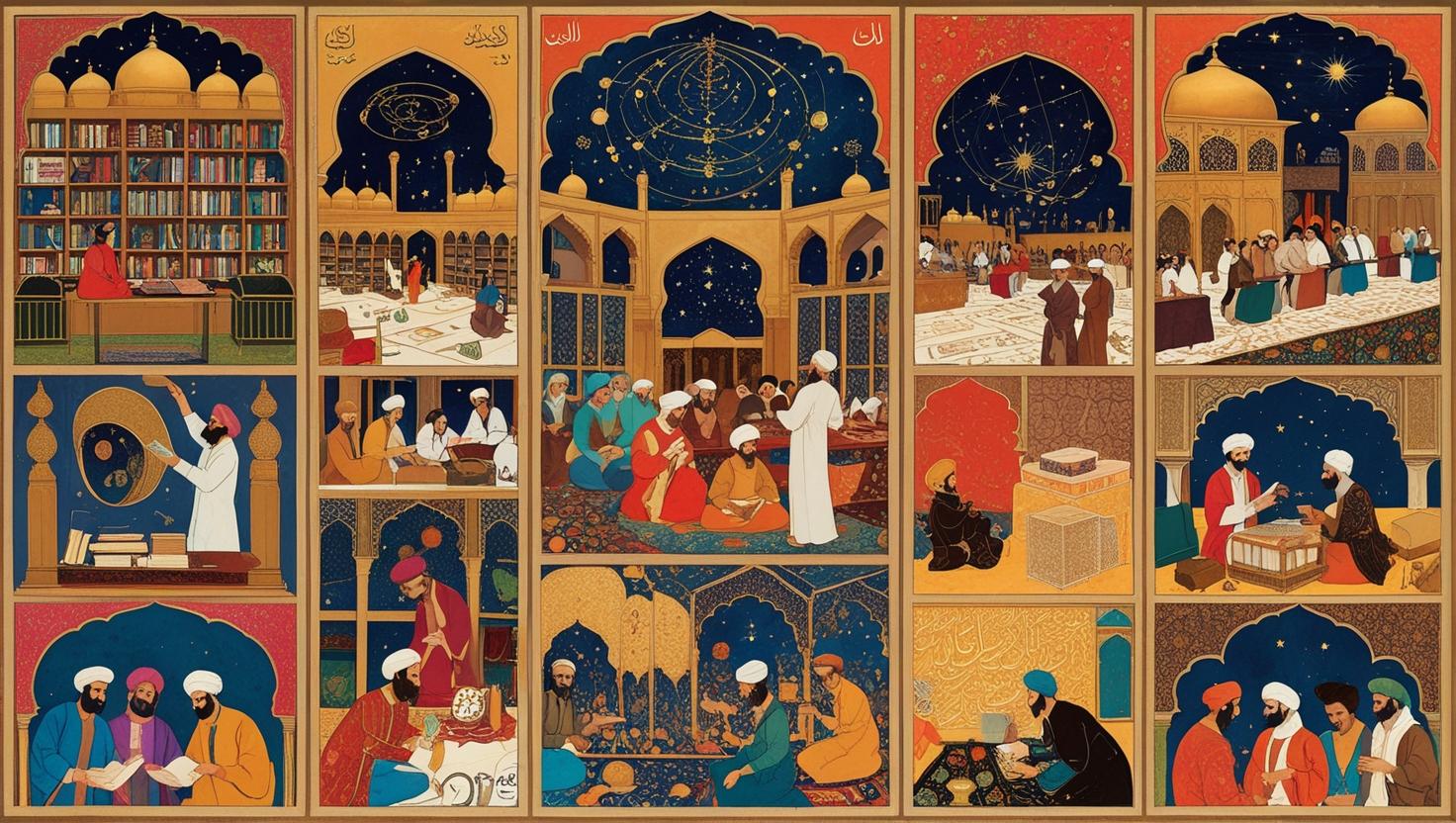
The Abbasid Caliphate, which rose to power in 750 CE, marked a profound transformation in Islamic governance, fundamentally reshaping the political and cultural landscape of the Islamic world.1 This pivotal shift was not merely a change in ruling dynasties but a response to widespread discontent with the preceding Umayyad Caliphate. The Umayyads, based in Damascus, were increasingly perceived as distant, decadent, and overly reliant on an Arab aristocracy, which led to the significant marginalization of non-Arab Muslims, known as
mawali.3 The Abbasid Revolution, initiated by various discontented groups, including the Shi’a, skillfully capitalized on these grievances, promising a more inclusive and just form of Islamic governance.1
This era, particularly spanning from the 8th to the 13th century, is widely celebrated as the “Islamic Golden Age”.1 It was a transformative period that witnessed an unparalleled flourishing of intellectual, cultural, and economic prosperity across the Islamic world.1 During this time, scholars, artists, and innovators from diverse backgrounds collaborated extensively, not only preserving ancient knowledge but also making groundbreaking original contributions that would profoundly influence global civilization for centuries to come.1 The political necessity of gaining broad support against the Umayyads inadvertently laid the groundwork for the intellectual dynamism that would define the Golden Age. The Abbasids’ inclusive policies, born out of a strategic need to unify disparate opposition groups, created a fertile ground for cross-cultural intellectual exchange and innovation. This demonstrates how profound political shifts, even those driven by immediate strategic concerns, can have far-reaching and positive impacts on cultural and scientific development, fostering an environment where knowledge and creativity can truly thrive.
The Abbasid Revolution: A New Dawn
The overthrow of the Umayyad Caliphate by the Abbasids was a complex historical event rooted in a confluence of political, social, and religious grievances. The Umayyad dynasty faced widespread dissatisfaction due to its perceived worldliness, decadence, and an Arab-centric policy that alienated non-Arab Muslims, who often felt relegated to a secondary status.3 This discrimination was a significant source of resentment, particularly in the eastern provinces where the
mawali population was substantial. Furthermore, internal tribal divisions between northern and southern Arab tribes were exacerbated by Umayyad favoritism, especially concerning land ownership, taxation, and political appointments, which fueled significant animosity among the marginalized groups.7
Religious divisions also played a crucial role in the Umayyad’s downfall. The Abbasids skillfully exploited the discontent of Shi’a Muslims, who believed that leadership should rightfully stem from the Prophet Muhammad’s own lineage.1 The Abbasids themselves bolstered their legitimacy by claiming direct descent from Abbas, the Prophet Muhammad’s uncle, presenting themselves as the rightful heirs to the Prophet’s legacy.3 This combination of political missteps, pervasive social inequalities, and deep-seated religious disaffection created a highly volatile environment. The Abbasids were particularly adept at identifying and unifying these disparate sources of dissatisfaction.
The Abbasids effectively leveraged this widespread dissatisfaction through potent propaganda, promising a more equitable distribution of wealth and power, and a return to the ethical principles of Islamic law as taught by the Prophet.3 This message resonated strongly with those who felt marginalized, allowing the Abbasids to forge a broad coalition of support, particularly strong among non-Arab Muslims in Persia and the eastern provinces of the Islamic world.3 The revolution culminated in the decisive Battle of the Zab River in 750 CE, where Abbasid forces triumphed over the Umayyad army, leading to the death of the last Umayyad caliph, Marwan II, and effectively ending the Umayyad dynasty.6 The success of the Abbasids in uniting a diverse array of opposition groups under a compelling banner of reform and inclusivity demonstrates how a complex interplay of political grievances, social inequalities, and religious disaffection can destabilize even a powerful empire and pave the way for a new order.
Baghdad: The Circular City, A Global Hub
The founding of Baghdad on July 30, 762 CE, by the second Abbasid Caliph, Abu Jaafar Al-Mansur, was a monumental undertaking.2 Conceived as a new imperial residence and palace city, its distinctive circular plan was a notable architectural and urban planning achievement for its time, featuring a central palace and mosque, surrounded by concentric rings for housing and markets.18 The choice of location in Mesopotamia was highly strategic, leveraging the fertile valleys of the Euphrates and Tigris rivers, excellent facilities for river communication, and a central geographical position between Iran, Syria, and Egypt.21
Baghdad rapidly became the capital of the Abbasid Caliphate and, for the subsequent five centuries, stood as the most significant cultural center of Arab and Islamic civilization, widely recognized as one of the greatest cities in the world.17 Its strategic location at the crossroads of major overland trade routes, particularly the Silk Road and connections between Asia and Europe, fostered a vibrant exchange of ideas alongside goods.23 The city attracted merchants, artisans, and scholars from diverse regions, cultivating a truly cosmopolitan atmosphere where various ethnic and religious groups coexisted and contributed significantly to its rich cultural mosaic.1
Baghdad’s bustling markets (suqs) traded a vast array of goods from distant lands including Russia, Africa, China, and Europe, and the city became the first place west of China to produce and widely sell paper.26 It also emerged as a cradle of modern financial institutions, pioneering services such as banks, the use of checks, and organized currency exchange markets.26 The founding and architectural layout of Baghdad were not merely exercises in urban planning but a deliberate, powerful statement of Abbasid power, religious legitimacy, and a definitive break from the Umayyad past. Its iconic “Round City” design, though no longer physically extant, symbolized a new, centralized, and divinely guided order, serving as a physical manifestation of the Abbasid vision for the caliphate as the spiritual, political, and intellectual heart of the Muslim world. This intentionality, contrasting sharply with the pre-existing, non-Islamic roots of the Umayyad capital, Damascus, reflected the Abbasids’ desire to distinguish their rule not only administratively but also ideologically.
Architects of Enlightenment: Key Caliphs and Their Patronage
The Abbasid Golden Age was not a static period of singular achievement but a dynamic process of intellectual and cultural growth, meticulously driven by an evolving caliphal vision. Early caliphs focused on establishing political legitimacy and foundational infrastructure, while later rulers consciously invested in knowledge acquisition and dissemination as a cornerstone of imperial prestige and societal advancement. This demonstrates a clear and sophisticated progression in state-sponsored intellectualism.
Al-Mansur (ruled 754-775 CE)
Al-Mansur is widely regarded as the true founder of the Abbasid dynasty, instrumental in consolidating power after the revolution and establishing the new capital, Baghdad.2 He established key administrative institutions and a centralized bureaucracy, fundamentally shifting the seat of government and political influence from Syria to Iraq.2 Al-Mansur initiated the crucial process of “re-Islamizing” the caliphate, notably by replacing secular judges with Islamic judges (
qaadah or qadi), thereby placing Islamic law and morality at the core of governance.9 His patronage of scholarship, including the foundational steps for the House of Wisdom, laid essential groundwork for the subsequent Golden Age.8
Harun al-Rashid (ruled 786-809 CE)
Harun al-Rashid’s reign is often considered the zenith of Abbasid power and cultural flourishing, becoming synonymous with the “Golden Age of Islam”.2 He is famously immortalized in “The Thousand and One Nights,” a testament to the era’s vibrancy and exoticism.2 Harun al-Rashid expanded diplomatic relations, notably engaging in exchanges with Charlemagne’s court in Europe.2 He continued to vigorously patronize arts, sciences, and literature, cementing Baghdad’s reputation as an international center of science and culture.2 His support for the translation movement was crucial, fostering the intellectual environment necessary for scientific development.11
Al-Ma’mun (ruled 813-833 CE)
A fervent champion of intellectual pursuits and cultural reforms, Al-Ma’mun significantly expanded the House of Wisdom, transforming it into a preeminent hub for scholarship and translation.2 He actively encouraged a formal translation movement, systematically rendering scholarly texts from Greek, Persian, and Indian languages into Arabic, thereby preserving and disseminating vast amounts of classical knowledge.8 Al-Ma’mun fostered a unique culture of collaboration among scholars of different religious backgrounds—Muslims, Christians, and Jews—within the House of Wisdom, emphasizing intellectual merit over religious affiliation.8
The evolution of caliphal patronage is evident in this sequence. Al-Mansur laid the foundational administrative and religious groundwork, actively “re-Islamizing” the caliphate and establishing its new capital. Harun al-Rashid then presided over the peak of the caliphate’s power and cultural flourishing, building upon these established foundations. Al-Ma’mun subsequently intensified the intellectual patronage, particularly through the systematic and large-scale translation movement. This shows a clear, deliberate progression: from establishing the state’s Islamic character and essential infrastructure, to enjoying its initial cultural fruits and prestige, and finally, to actively and strategically investing in intellectual capital as a core state function and a source of imperial glory.
Table 1: Key Abbasid Caliphs and Their Contributions
| Caliph Name | Reign Period (CE) | Key Contributions |
| Al-Mansur | 754-775 | Founded Baghdad; Consolidated Abbasid power; Established centralized bureaucracy; Initiated “re-Islamization” of governance; Laid groundwork for House of Wisdom 2 |
The Flourishing of Knowledge: Science, Philosophy, and Education
The Abbasid era is synonymous with an unprecedented flourishing of knowledge, largely centered around the iconic House of Wisdom in Baghdad. Established initially as a library by Caliph Harun al-Rashid and significantly expanded under his son Al-Ma’mun, it became the central intellectual institution of its time.8 This institution served as a vibrant hub where scholars from diverse backgrounds—Muslims, Christians, and Jews—could gather, translate, and build upon knowledge from various cultures.8 A primary and foundational activity of the House of Wisdom was the formal translation movement, systematically rendering scholarly texts from Greek, Persian, and Indian languages into Arabic, thereby preserving vast amounts of classical knowledge that might otherwise have been lost.8 This ambitious movement was driven by a complex mix of intellectual curiosity, social needs, and political motives, reflecting a deep societal commitment to learning.11
The Islamic Golden Age was far more than a period of merely preserving ancient Greek and Roman knowledge; it was a dynamic era of profound original scientific inquiry and innovation. Abbasid scholars did not simply translate texts; they critically engaged with them, developed entirely new methodologies, and made foundational discoveries in diverse fields.
Groundbreaking Advancements
- Mathematics: Al-Khwarizmi, a prominent scholar associated with the House of Wisdom, is credited with developing algebra (derived from the Arabic word “al-jabr”) and formalizing the concept of algorithms, laying foundational groundwork for modern mathematics and computer science.12 Significant advancements were also made in trigonometry, including the creation of the first table of sines by the mathematician Abu al-Wafa’ al-Buzjani.31 The introduction and widespread adoption of Arabic numerals revolutionized mathematical calculations.12
- Astronomy: Abbasid astronomers achieved remarkable accuracy in measuring the Earth’s circumference, studying the precession of the equinoxes, and meticulously tracking the motion of stars.12 Advanced observatories were constructed (e.g., Maragheh Observatory), and the astrolabe, a sophisticated astronomical instrument, was significantly improved for navigation and timekeeping.12 Al-Zarqali, for instance, developed a more accurate astrolabe and made crucial discoveries regarding the Sun’s apogee movement.33
- Medicine: The era saw the establishment of the first hospitals, known as bimaristans, which set new standards for modern healthcare by emphasizing patient care and rigorous physician training.12 Pioneers like Al-Razi (Rhazes) compiled comprehensive medical encyclopedias, accurately differentiated between smallpox and measles, and developed the concept of quarantine to control infectious diseases.12 Ibn Sina (Avicenna) authored “The Canon of Medicine,” which served as a standard medical textbook in European universities for centuries.12 Al-Zahrawi (Abulcasis) was a renowned surgeon who meticulously described numerous surgical instruments and techniques in his monumental 30-volume medical encyclopedia, “Al-Tasrif”.12 Key discoveries included a deeper understanding of the circulatory system and the heart’s role in blood circulation.12
- Optics: Ibn al-Haytham (Alhazen) made groundbreaking discoveries in optics and visual perception. His “Book of Optics” explained the role of the retina in vision and the principles of refraction and reflection, laying fundamental groundwork for modern optics.12 He is also credited with building the first camera obscura.13
- Chemistry & Alchemy: The early Islamic period fostered the development of theoretical frameworks in alchemy and chemistry, leading to significant advancements in both fields, including the emergence of systematic medicinal chemistry.14
- Engineering: Innovations included the development of windmills for grinding grain and pumping water, the creation of complex water clocks by Al-Jazari, and the construction of advanced irrigation systems.12
The Preservation and Expansion of Classical Knowledge Through Translation
The extensive translation movement was crucial in connecting Eastern knowledge with Western Europe. These translated texts were later reintroduced to Europe, directly sparking the intellectual curiosity that led to the European Renaissance.12 Notably, both Muslim and non-Muslim scholars (including Jews and Christians) actively participated in this collaborative intellectual process, contributing to the vibrant scholarly environment.8 The Abbasid Caliphate’s period of flourishing knowledge demonstrates that it was not merely a period of preserving ancient Greek and Roman knowledge; it was a dynamic era of profound original scientific inquiry and innovation. Abbasid scholars did not simply translate texts; they critically engaged with them, developed entirely new methodologies (such as the scientific method), and made foundational discoveries in diverse fields, thereby significantly advancing the entire corpus of human knowledge.
Table 2: Scientific and Intellectual Milestones
| Field | Key Contributions/Inventions | Prominent Scholars |
| :— | :— | :— | | Mathematics | Development of Algebra and Algorithms; Advancements in Trigonometry; Introduction of Arabic Numerals | Al-Khwarizmi, Al-Biruni, Abu al-Wafa’ al-Buzjani 12 | Astronomy | Accurate measurements of Earth’s circumference; Advanced Observatories (e.g., Maragheh); Improved Astrolabe | Al-Biruni, Al-Zarqali 12 | Medicine | Establishment of
Bimaristans (hospitals); Differentiation of diseases (smallpox/measles); Concept of Quarantine; Surgical techniques and instruments; Understanding of circulatory system | Al-Razi (Rhazes), Ibn Sina (Avicenna), Al-Zahrawi (Abulcasis) 12 | Optics | Theory of vision; Principles of refraction/reflection; Invention of Camera Obscura | Ibn al-Haytham (Alhazen) 12 | Chemistry | Theoretical frameworks in alchemy and chemistry; Systematic medicinal chemistry | Various Abbasid scholars 14 | Engineering | Windmills; Complex water clocks; Advanced irrigation systems | Al-Jazari, various Abbasid engineers 12 |
A Tapestry of Creativity: Art, Literature, and Architecture
The Abbasid era witnessed a vibrant flourishing of arts, with the caliphs serving as significant patrons.1 New and distinctive artistic styles and techniques rapidly spread from the new capitals of Baghdad and Samarra throughout the caliphate.20 Manuscript illumination, for the first time in the Islamic world, became a greatly respected art form, and portrait miniature painting flourished particularly in Persia.20 Calligraphy, an essential aspect of Islamic art since its very beginnings, experienced further significant development and was widely used in both manuscripts and architectural decoration.20 The “arabesque”—a new method of carving surfaces involving the repetition of abstract geometric or vegetal forms—became a hallmark of Islamic art, widely used in wall decoration, metalwork, and pottery.20 Luster painting over a white glaze was a particularly admired technique, especially in Samarra, for its glittering effect, and its influence spread to other regions, including Spain, where it impacted ceramic decoration.20
Arabic solidified its position as the lingua franca of the Islamic world, leading to a profound shift and unprecedented flourishing in literature.19 The House of Wisdom played a crucial role in supporting the growth of Arabic literature through its extensive translation efforts.19 The era saw the emergence of numerous influential poets and writers, such as Al-Mutanabbi and Al-Jahiz, who significantly shaped the literary landscape of the time.19 Poetry was considered the highest form of artistic expression in Arab culture, with court poets producing works on a wide range of themes, from love and wine to religion and philosophy.36 The city of Baghdad itself served as a muse, with its vibrant landscapes and cosmopolitan atmosphere frequently captured and celebrated in poetic verses.37
Abbasid architecture was distinctly characterized by the innovative use of arches, domes, and minarets, which subsequently became enduring hallmarks of Islamic architecture globally. Notable examples include Baghdad’s Round City, whose innovative circular design was a remarkable urban planning achievement, even though no material remains of Al-Mansur’s original city exist today due to fragility and subsequent destruction.20 Samarra, a new capital established by Caliph al-Mutasim, featured extensive palaces (like Jausaq al-Khaqani) and grand mosques, most famously the Great Mosque of Samarra with its distinctive spiral Malwiyya minaret, and the Abu Dulaf Mosque.20 These structures often incorporated Central Asian influences, such as wall paintings featuring Bactrian camels.20 The Al-Ukhaidhir Fortress in Karbala stands as an early and well-preserved example of Abbasid architecture and fortification, notably recalling Sassanian techniques and materials.20 The Ibn Tulun Mosque in Cairo, built by Ahmad Tulun, is one of the oldest in Egypt and provides an excellent example of ninth-century architectural decoration, featuring distinctive openwork crenellations and slightly pointed arches.20 The Mustansiriya Madrassa (1227-1233) and Abbasid Palace (1230) in Baghdad are some of the most famous surviving buildings from the late Abbasid period, showcasing intricate brickwork decoration and the characteristic four-iwan courtyard layout.14
Abbasid artistic and architectural achievements were not simply aesthetic pursuits but were profoundly intertwined with religious expression and political legitimacy. Caliphal patronage fostered a unique and distinctive Islamic aesthetic characterized by intricate calligraphy, sophisticated geometric patterns, and grand structures like mosques and palaces. These magnificent buildings served a dual purpose: they were potent symbols of imperial power and wealth, while simultaneously functioning as vital centers for religious devotion, intellectual discourse, and community life. This demonstrates how art and architecture can powerfully reinforce and reflect the core values and authority of a flourishing civilization.
Economic Prosperity: Trade, Agriculture, and Innovation
The Abbasid period was characterized by significant economic growth and a remarkable expansion of trade networks across vast territories.2 Baghdad’s strategic location along the ancient Silk Road and its position as a nexus between Asia and Europe made it a prime hub for overland trade.10 Beyond land routes, extensive sea routes stretched from Iraq all the way to Indonesia, with ships regularly stopping at numerous ports to facilitate trade.24 Key commodities traded included Chinese silk, ceramics, paper, and tea; spices from India; teakwood from Southeast Asia; and luxury goods such as ivory, soap, honey, and diamonds.23 Baghdad itself was a significant exporter of silk, glass, tiles, and paper.23
Baghdad emerged as the cradle of modern financial institutions and sophisticated services, pioneering concepts such as banks, the use of checks (ṣakk), and organized currency exchange markets.10 These innovations greatly facilitated long-distance trade and economic transactions, providing a stable and efficient framework for commercial activities across the vast empire.
The era witnessed what is often termed the “Arab Agricultural Revolution,” a period of significant transformations in farming practices.34 Key innovations included the development of sophisticated land and water management methods, such as the widespread use of
qanats (underground channels for water distribution), new plowing and planting processes, and the introduction of diverse crops adapted to various climates.34 The Abbasids diligently preserved and improved ancient networks of wells, underground canals, and waterwheels, ensuring efficient irrigation.28 New crops like sugar cane, bananas, cotton, artichokes, spinach, aubergines, carrots, citrus, and olives were introduced and widely cultivated, significantly diversifying the economy and the dietary habits of the population.12 Techniques for intensive irrigation agriculture, coupled with methods for land fertility replacement, were mastered, allowing for sustained high yields.35 Animal husbandry also saw improvements through selective breeding, enhancing livestock quality.35
The Abbasid Caliphate’s remarkable economic prosperity, meticulously built upon vast and intricate trade networks and transformative agricultural innovations, was not merely a sign of wealth but served as a crucial and fundamental enabler of its cultural and intellectual “Golden Age.” The efficient flow of goods across immense distances inherently facilitated the dynamic exchange of ideas, critical technologies (such as papermaking), and diverse cultural practices, thereby creating a truly cosmopolitan and intellectually fertile environment essential for widespread scholarly collaboration and groundbreaking innovation.
Table 3: Economic Pillars of the Abbasid Golden Age
| Category | Specific Examples |
| :— | :— | | Trade Routes | Silk Road, extensive sea routes connecting Iraq to Indonesia, overland routes between Asia and Europe 10 | Key Commodities | Chinese silk, ceramics, paper, tea; Indian spices; Southeast Asian teakwood; ivory, soap, honey, diamonds; Abbasid exports of silk, glass, tiles, paper 23 | Financial Innovations | Development of banks, use of checks (
ṣakk), organized currency exchange markets 10 | Agricultural Advancements | “Arab Agricultural Revolution”;
Qanats for water distribution; new plowing/planting; introduction of diverse crops (sugar cane, cotton, citrus, vegetables); improved irrigation and land fertility techniques; selective animal breeding 12 |
Society and Governance: A Diverse and Evolving Realm
The Abbasid Caliphate introduced a notably more complex and sophisticated political system compared to its predecessors, drawing significant inspiration from refined Persian administrative traditions while integrating core Islamic principles.2 They established a robust centralized bureaucracy and created the new, powerful position of vizier to delegate central authority effectively across the vast empire.4 In theory, the caliph’s authority was subject to Sharia (Islamic law), which provided a comprehensive legal framework governing personal, social, and religious life for Muslims. Islamic judges (
qadis) were appointed throughout the realm, replacing secular judges, and the institution of the Muhtasib (market inspector) was established to ensure compliance with Islamic law in the marketplace.18 Crucially, Islamic law was often adapted to local customs and practices in various regions, creating a unique blend of traditional practices and Sharia principles. This adaptability helped promote harmony within Muslim communities and fostered interactions with non-Muslim populations, contributing to a complex social fabric.
A key distinction of Abbasid rule, compared to the Umayyads, was their more inclusive approach towards non-Arab Muslims (mawali), who had previously faced significant marginalization.1 Non-Arab Muslims, particularly Persians, gained significant influence and were appointed to high offices, including the prestigious position of grand vizier.4 Non-Muslims (known as
dhimmis) were generally permitted to practice their religions freely, provided they paid a special tax called jizya. They could even, at times, hold positions of authority within the government.37 Some caliphs, such as Al-Ma’mun and Harun Al-Rashid, were renowned for their liberal tolerance towards non-Muslims, even appointing Christians to lead important institutions like the House of Wisdom.37 However, it is important to note that this tolerance had its limits, with restrictions on building new places of worship or open proselytization, and there were periods of persecution, particularly under Caliph Al-Mutawakkil.38 The Abbasid Caliphate’s renowned inclusivity, particularly towards non-Arab Muslims and non-Muslims, was a complex blend of genuine Islamic principles of equality 9 and astute pragmatic political strategy. While this approach undeniably fostered unprecedented cultural exchange and social mobility, the historical record also reveals periods of intolerance and continued restrictions on non-Muslims, indicating that the “Golden Age” was not without its internal tensions and that policies were often shaped by the shifting needs and political calculations of the ruling elite.
Abbasid society, while characterized by complex social hierarchies, also exhibited relatively high social mobility, allowing individuals to rise in status based on merit and skill, particularly benefiting non-Arabs.9 Islamic law (Sharia) provided women with significant rights, including property ownership and inheritance, and marriage contracts could include stipulations specifically protecting women’s interests.2 Women also had the right to seek divorce through legal channels, though with some limitations.2 The status and roles of women varied considerably across different social classes and regions within the vast empire, with the era seeing both notable advancements and certain restrictions on women’s participation in society. It is crucial to understand that many common misconceptions about women’s oppression in Islam often stem from cultural practices prevalent in certain societies rather than the core religious teachings, which emphasize dignity, respect, and equality for women.
The Fading Glow: Challenges and Decline
The Abbasid Caliphate experienced a sharp economic decline, particularly in the 10th century, a direct result of a combination of factors. These included devastating civil wars (e.g., the conflict between al-Amin and al-Ma’mun), widespread revolts (such as the Zanj and Qarmatian uprisings), and significant political interference by powerful Turkish and Daylamite military factions.40 These internal conflicts had a destructive effect on the city of Baghdad and its citizens, ruining much of the agricultural land and causing a severe devaluation of currency (dirhams and dinars), leading to economic instability and inflation.40 The Zanj and Qarmatian revolts, in particular, paralyzed trade in southern Iraq, leading to a stagnation of the currency and banking system and a sharp decrease in overall financial activity.40
The involvement of Turkish and Daylamite soldiers in politics, and their internal rivalries for power, led to the devastation of crucial canals and dams, which consequently ruined the vital agricultural sector.40 Furthermore, the introduction of military
iqta’ (land grants to soldiers) during this period often resulted in the excessive exploitation and abandonment of cultivated lands, further damaging agricultural productivity.40 The activities of the
‘ayyarun (vagabonds or riff-raff), who engaged in looting merchants’ goods, burning houses, and killing people, inflicted considerable losses on the merchant class, prompting many to leave Baghdad and seek business opportunities in other cities.40 The financial strain from continuous military campaigns and the immense cost of maintaining a vast bureaucracy also significantly drained the state’s resources.10
By 940 CE, the centralized power of the caliphate began to wane significantly as non-Arabs gained increasing influence, and various subordinate sultans and emirs became progressively independent.4 The emergence of numerous “petite dynasties” was directly attributable to the weakening of the central government and a growing spirit of tribalism and regionalism, particularly among non-Arab populations, who sought to break free from direct Abbasid control.41 Provinces like Ifriqiyah (North Africa) had already broken away during the reign of Harun al-Rashid, and other provinces followed suit under al-Ma’mun.28 A notable example is the Fatimid dynasty, a rival Shi’a caliphate, which broke from the Abbasids in 909 CE and established a powerful, independent realm across North Africa and Egypt.4
The decline of the Abbasid Caliphate illustrates a classic historical paradox: the very strategies employed to centralize and manage a vast, diverse empire (e.g., delegating authority to powerful regional figures and incorporating non-Arab elites into the administration) eventually contributed directly to its fragmentation. Internal civil wars, persistent economic mismanagement, and the inexorable rise of powerful, independent regional dynasties ultimately eroded the caliphate’s political power, even as its profound cultural and intellectual legacy continued to endure for centuries. The Abbasid Caliphate’s political importance effectively ended with the conquest of Baghdad by the Mongol leader Hülegü in 1258 CE, an event that devastated the city and its intellectual institutions.17 Although the dynasty continued to claim religious authority, its political power had disintegrated, with this religious claim enduring until the Ottoman conquest of Egypt in 1517.4
Enduring Legacy: Shaping Islamic and Global Civilization
The Abbasid Caliphate left an indelible and profound mark on Islamic civilization and, indeed, on world history as a whole.2 Their cultural and intellectual achievements were so significant that they continue to influence modern societies in various ways.2
In terms of intellectual traditions, the establishment of pioneering institutions like the House of Wisdom not only standardized knowledge but also fostered a vibrant culture of learning that served as a foundational model for subsequent centers of scholarship across the Islamic world and beyond.14 For
scientific inquiry, the groundbreaking contributions made in fields such as mathematics (e.g., the development of algebra and algorithms), astronomy (e.g., the construction of advanced observatories and improvements to the astrolabe), medicine (e.g., the establishment of hospitals and advancements in surgical techniques), and optics laid fundamental groundwork for modern scientific inquiry and methodologies.12 Regarding
cultural development, the flourishing of sophisticated Arabic literature, the development of highly distinctive Islamic art forms (such as intricate calligraphy and the arabesque), and the creation of iconic architectural styles (characterized by domes, minarets, and the four-iwan courtyard layout) profoundly shaped Islamic cultural identity and aesthetics.
The enduring legacy of the Abbasid Golden Age transcends the Islamic world, positioning the caliphate as a critical and indispensable intellectual bridge between the classical civilizations and the European Renaissance. The systematic Latin translations of Abbasid scientific and philosophical texts played a crucial role in rekindling scientific inquiry and intellectual curiosity in Europe, directly contributing to the intellectual ferment that characterized the European Renaissance.12 Abbasid advancements in core mathematical concepts (like algebra and algorithms) and critical technologies (such as the astrolabe and papermaking techniques) became foundational elements in European thought and practical application.12 The vibrant intellectual traditions fostered during this era laid the essential groundwork for future developments in education and science on a global scale, demonstrating a profound and lasting ripple effect.1 By systematically translating, diligently preserving, and, most importantly, profoundly advancing knowledge in diverse fields, the Abbasids provided the essential intellectual impetus and foundational texts that would later spark scientific and philosophical revolutions in the West, thereby underscoring their profound, lasting, and truly global impact on the trajectory of human thought and progress.
Conclusion
The Abbasid Caliphate, emerging from the discontent with its Umayyad predecessors, ushered in a transformative era that profoundly shaped Islamic civilization and left an indelible mark on global intellectual history. Its rise was not merely a change of guard but a complex interplay of political, social, and religious factors that culminated in a promise of more inclusive governance. This promise, particularly the integration of non-Arab Muslims and a renewed emphasis on Islamic principles, created a fertile ground for unprecedented cultural and intellectual flourishing.
The establishment of Baghdad as the new capital, meticulously designed as a cosmopolitan hub, symbolized this new order. It became a vibrant center of trade, drawing merchants and scholars from across continents, and fostering an environment where ideas, technologies, and goods flowed freely. This economic dynamism, fueled by innovations in banking and a revolutionary approach to agriculture, provided the material foundation for the intellectual explosion that followed.
Under the patronage of visionary caliphs like Al-Mansur, Harun al-Rashid, and Al-Ma’mun, the Abbasid state actively invested in knowledge. The House of Wisdom, in particular, became a beacon of learning, where scholars from diverse backgrounds collaborated to translate, preserve, and, crucially, advance classical knowledge. This period saw groundbreaking original contributions in mathematics, astronomy, medicine, optics, and engineering, demonstrating a dynamic spirit of innovation that extended far beyond mere preservation.
While the Abbasid Caliphate eventually faced internal strife, economic decline, and the rise of autonomous regional powers, leading to the fragmentation of its political authority and the eventual fall of Baghdad, its cultural and intellectual legacy endured. The systematic translation and dissemination of knowledge during the Golden Age directly influenced the European Renaissance, providing foundational texts and concepts that spurred scientific and philosophical revolutions in the West. The Abbasids thus served as a critical intellectual bridge, underscoring their profound and lasting global impact on the trajectory of human progress.