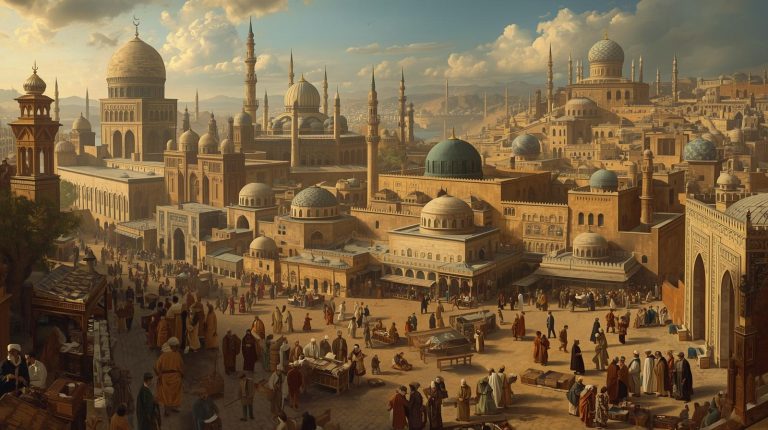

Before British rule, Bengal — the region that includes modern Bangladesh — was one of the richest and most productive economies in the world. Its fertile delta produced abundant crops, its artisans created globally coveted textiles like muslin and silk, and its cities were hubs of trade, culture, and scholarship. Historians consistently describe Bengal under the Sultanate and Mughal periods as an economic powerhouse, deeply integrated into international markets and admired for its craftsmanship and p
This prosperity began to unravel after the Battle of Plassey in 1757, when the British East India Company seized political control of Bengal. What had been a commercial relationship suddenly transformed into a colonial extraction machine. By 1775, the Company had become the effective ruler of the entire Bengal region, including present‑day Bangladesh, marking the beginning of a systematic economic dismantling that would reshape the region’s destiny.
One of the earliest and most devastating blows was the direct plunder of Bengal’s treasury. The East India Company extracted enormous sums of money immediately after taking power, draining capital that had sustained local industries and agricultural systems. This sudden outflow destabilised the economy and shifted wealth from Dhaka and Murshidabad to London, laying the financial foundation for Britain’s industrial rise.
The British then targeted Bengal’s most valuable asset: its textile industry. Bengal’s muslin was legendary — so fine it was described as “woven air” — and its silk and cotton fabrics dominated global markets. British manufacturers could not compete, so the Empire used policy, coercion, and violence to destroy the industry. Heavy taxes, forced contracts, confiscation of looms, and the imprisonment of weavers crippled production. As one modern analysis notes, the British Empire “broke Bengal’s textile backbone,” turning a thriving industry into a memory.
Agriculture suffered a similar fate. The Permanent Settlement of 1793 imposed a rigid land‑tax system that empowered zamindars loyal to the British while crushing peasants with impossible revenue demands. Taxes had to be paid even during floods, droughts, or crop failures. This system uprooted traditional agrarian structures, created cycles of debt, and pushed millions into poverty. It also ensured that wealth flowed upward to colonial administrators rather than remaining within local communities.
These extractive policies contributed directly to catastrophic famines. The most infamous early example was the Great Bengal Famine of 1770, but the pattern continued into the 20th century. The Bengal Famine of 1943, which killed between 800,000 and 3.8 million people, was driven by British wartime policies, mismanagement, and refusal to intervene despite clear signs of mass starvation. Scholars emphasise that these famines were not natural disasters — they were political failures rooted in colonial priorities.
By the 19th century, Bengal’s economy had collapsed. Its industries were destroyed, its agricultural system was overtaxed and fragile, and its population was impoverished. What had once been one of the world’s richest regions had become one of its poorest. Meanwhile, Britain’s wealth soared. As many historians argue, Britain’s industrial revolution was financed in part by the extraction of Bengal’s resources, labour, and revenue.
When Bangladesh finally emerged as an independent nation in 1971, it inherited the long‑term consequences of this colonial devastation. The country began its journey with a weak industrial base, widespread rural poverty, minimal infrastructure, and an economy deliberately underdeveloped for nearly two centuries. The contrast between Bengal’s pre‑colonial prosperity and Bangladesh’s post‑colonial poverty is one of the starkest examples of how colonialism can reverse a region’s economic trajectory.
Today, Bangladesh is rebuilding — and in many ways, rising again. But understanding how Britain transformed one of the richest regions on earth into one of the poorest is essential for appreciating the scale of that challenge. The story of Bengal’s decline is not simply a historical footnote; it is a reminder of how global power can be built on the destruction of another society. Recognising this history is a step toward reclaiming the economic dignity that was taken — and toward shaping a future that reflects Bengal’s true legacy of resilience, creativity, and prosperity.