Beyond the Screen: Making Kids’ School Holidays Spiritually & Productively Rich (An Islamic Guide)
Introduction: Reclaiming Holiday Time for Purpose and Growth
School holidays, while eagerly anticipated as a respite from academic rigors, frequently present a unique set of challenges for modern parents. What often begins with the promise of rest and rejuvenation can quickly devolve into prolonged periods of unstructured idleness, frequently dominated by excessive screen time. Children are increasingly observed to be constantly engaged with phones, video games, and television, often with limited active parental engagement in their play.1 This pervasive trend is a source of growing concern, as it has been associated with increased restlessness, irritability, difficulty concentrating, and a growing dependence on constant digital stimulation, leaving children bored and disengaged without their devices.2 This societal norm of passive consumption during leisure time often stands in stark contrast to a more purposeful approach to life.
From an Islamic perspective, time is not merely a commodity to be passed but is regarded as one of Allah’s most profound gifts, an invaluable trust (Amanah) for which every individual will ultimately be held accountable.3 The Quran profoundly emphasizes this truth in Surah Al-Asr, which declares: “By time, indeed, mankind is in loss, Except for those who have believed and done righteous deeds and advised each other to truth and advised each other to patience” (Quran 103:1-3).4 This powerful verse serves as a constant and urgent reminder that every fleeting moment carries the potential for profound loss unless it is purposefully invested in faith, righteous actions, upholding truth, and cultivating patience. This understanding elevates time management from a mere productivity hack to a spiritual obligation, emphasizing that every moment spent productively in line with Islamic values contributes to one’s spiritual capital for the afterlife.
The contrast between modern society’s tendency to squander time and Islam’s emphasis on purposeful living creates a significant, multi-layered challenge for Muslim parents. This is particularly evident during school holidays, which, from an Islamic lens, transcend mere academic breaks. They transform into golden opportunities for holistic development—spiritual, intellectual, physical, and social—all guided by timeless Islamic principles.11 The Prophet Muhammad (PBUH) further highlighted this by stating, “There are two blessings which many people lose: health and free time”.3 This indicates that parental guidance during holidays is not just about keeping children busy, but about fulfilling a fundamental aspect of Islamic upbringing and preparing children for their ultimate accountability. This understanding implies that parents have a direct responsibility to teach their children how to manage this divine gift, transforming the often-stressful task of holiday management into a profound act of worship itself.
The Islamic Foundation of Productive Leisure
The Islamic worldview profoundly shapes the understanding and utilization of time. It regards time as a non-renewable resource, a “capital” that, once spent, can never be regained.10 This perspective is underscored by the profound reminder that on the Day of Resurrection, every individual will be meticulously questioned about how they spent their life, particularly their youth, their wealth, and their knowledge.4 This profound sense of accountability elevates purposeful living, even during periods of leisure, to a spiritual imperative. Imam Ar-Raazi’s poignant analogy of human life as “blocks of ice melting away with each second” 10 serves as a powerful metaphor for the irreversible passage of time. This analogy implies that idleness is not a neutral state; rather, it represents a constant, active loss, making purposeful engagement during holidays a critical preventative measure against both spiritual and worldly regret.
The Prophet Muhammad (PBUH) provided comprehensive guidance on children’s upbringing, emphasizing the importance of play in early childhood. He advised, “Leave the child free to play till it is seven years old” 14 and proclaimed, “Let them play; the earth is the pasture of the children!”.14 This guidance highlights that play is a natural and indispensable prerequisite for a child’s healthy development. The Prophetic teachings clarify that a child’s playfulness in early childhood contributes directly to strengthening their intellect in adulthood.1 Furthermore, games are seen to provide children with a comprehension of life, a means of physical exercise, and a way to acquaint themselves with social norms, thereby strengthening their feelings.14 This understanding elevates play from a mere pastime to a crucial developmental tool for cognitive, physical, social, and emotional intelligence, laying a robust groundwork for a well-rounded adult. This transformative view of play integrates it as a vital component of
tarbiyah (self-development).15
The Prophet’s own active engagement in playful activities with children, such as playing with his grandson Hasan, consoling a boy named Abu Umayr over his pet sparrow, and even engaging in playful races with his wife Aisha 16, provides a powerful and imitable model for parents. This is not merely historical anecdote; it establishes a
Sunnah (Prophetic tradition) that encourages parents to actively participate in their children’s play. This active parental involvement in recreation is understood to strengthen family bonds and foster a joyful environment, which itself carries significant spiritual benefits. It transforms play from an isolated activity for children into a shared, spiritually rewarding family experience, emphasizing the importance of lighthearted family interaction.11
Islam strongly discourages idleness and procrastination, viewing them not merely as bad habits but as deceptions from Shaitan (Satan) that lead individuals to prioritize fleeting worldly desires (dunya) over the eternal rewards of the afterlife (akhirah).17 The squandering of time can culminate in profound regret for missed opportunities for good deeds and even potential eternal punishment.7 The human
nafs (self) is inherently active; if it is not actively engaged with truth and beneficial pursuits, it will inevitably become preoccupied with falsehoods, reckless thoughts, and trivialities.9 This indicates that idle holidays create a spiritual vacuum that can be filled by negative influences, making purposeful planning a crucial form of spiritual protection, particularly for children who are still developing self-control and discernment.19
The Islamic perspective further clarifies that holidays are not an excuse for lax supervision; rather, they demand “greater care” and “judicious supervision” from parents.11 This reframe implies that holidays represent a heightened period of parental responsibility, a test of their commitment to their children’s holistic development. Neglecting this duty can have severe long-term consequences, including children developing attachments to “un-Islamic activities and interests”.12 Therefore, structuring holidays with purpose is not merely beneficial but crucial to avert these detrimental consequences and ensure continuous spiritual and personal growth.
Crafting a Holistic Holiday Schedule: Nurturing Mind, Body, and Soul
To ensure children’s school holidays are periods of meaningful growth, a holistic approach is essential, addressing spiritual, intellectual, physical, and social dimensions.
Spiritual Development
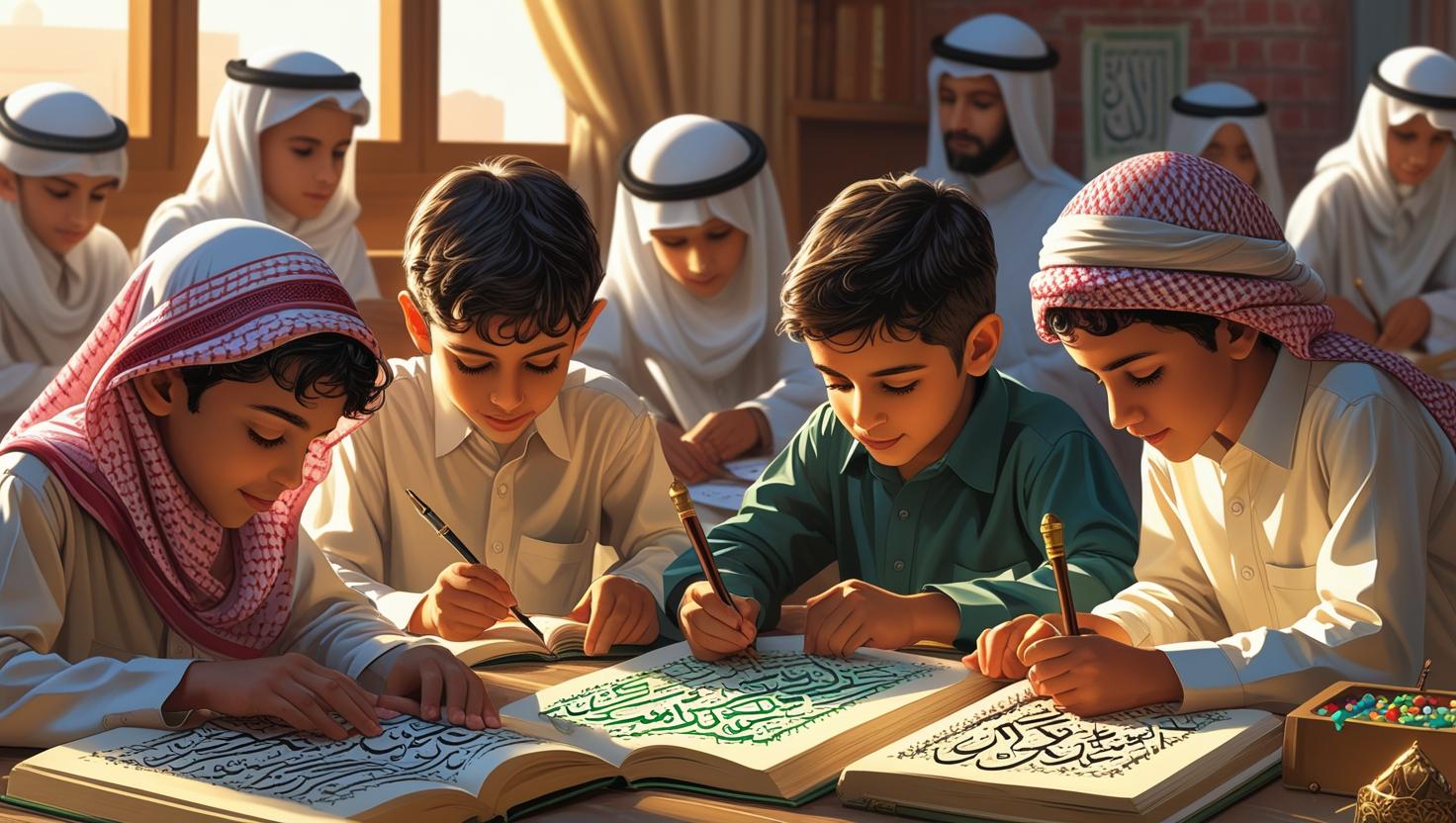
School holidays offer an invaluable opportunity to significantly strengthen a child’s spiritual foundation. This can be achieved by dedicating consistent time for Quran recitation, memorization, and Tafsir (understanding meanings).11 Encouraging regular engagement in
Dhikr (remembrance of Allah) during breaks or at the start of the day combines productivity with spiritual remembrance.24 Furthermore, reading about the lives of prominent Islamic figures and historical events can profoundly inspire children, instilling in them a deep appreciation for their rich heritage and the sacrifices made for Islam.21
The concept of Tazkiyat al-Nafs (purification of the self) is central to spiritual growth and is a continuous, lifelong process aimed at transforming the carnal self (nafs) from its base desires towards a state of purity and complete submission to God’s will.15 This dual process involves both cleansing the soul from evil inclinations and adorning it with virtuous qualities.15 This profound understanding of
Tazkiyat al-Nafs as “purification of the soul from inclination towards evils and sins, and the development of its fitrah towards goodness” 15 provides a spiritual framework for all holiday planning. It suggests that holiday activities focused on spiritual development are direct applications of
Tazkiyat al-Nafs, helping children move from the “inciting self” (nafs al-ammarah) to the “self-reproaching soul” (nafs al-lawwamah) and ultimately to the “tranquil soul” (nafs al-mutmainnah).19
Practical methods for cultivating the self include sincere repentance, constant remembrance of Allah, conscious resistance against base desires, self-rebuke, and regular self-observation (muraqabah) and self-examination (muhasabah).15 This internal “greater
jihad” against the ego 19 is paramount for spiritual growth and the ultimate attainment of a “tranquil soul” (
Nafs al-Mutmainnah).27 For children, these profound concepts can be introduced and simplified through practical lessons in gratitude, patience, and the importance of avoiding excessive indulgence in fleeting pleasures.19
The five daily prayers are not merely obligatory religious duties but serve as natural, divinely ordained timekeepers within Islam, providing a disciplined and rhythmic structure to the day.35 By consciously planning all other activities around these Salah times, families can ensure that spiritual commitments are met consistently while worldly tasks are organized with greater efficiency. For example, tasks requiring high focus or dedicated study can be scheduled for the early morning after Fajr prayer, when the mind is typically freshest and most alert.35 This approach not only helps instill punctuality and discipline but also imbues a profound sense of purpose in children’s daily lives, anchoring them to their faith.12 The idea that “Salah creates a rhythmic order in our lives” and “establishes our own natural order and harmony” 36 indicates that prayer is not just a spiritual act but a practical framework for organizing time, preventing procrastination, and enhancing focus throughout the day, making it a powerful tool for productive holidays.
Intellectual Growth & Skill Building
Holidays offer an ideal extended period for active knowledge pursuit, encouraging children to delve into various subjects beyond their school curriculum. This includes learning and memorizing Ahadith (Prophetic sayings), reading Islamic texts, and engaging with knowledgeable individuals or scholars.11 This emphasis on seeking knowledge is presented not just as an academic pursuit but as a protective measure against negative influences and “un-Islamic activities”.12 It frames learning as a proactive defense mechanism for children’s spiritual and moral well-being.
Beyond formal learning, fostering creativity through educational games that sharpen thinking and problem-solving skills is highly recommended. Activities like building blocks, jigsaw puzzles, and various crafting materials (e.g., stitching, carpentry tools for older kids) can stimulate imaginative and creative capabilities.14 The emphasis on “educational toys” like building blocks and puzzles 14 and activities like “Islamic geometric art” 21 highlights that even play can be intentionally designed for cognitive development, sharpening “thinking and creative capabilities.” Parents should thoughtfully provide a diverse range of educational toys and materials, offering subtle guidance when needed to maximize their developmental benefit.14 Activities like building a model Masjid or making a prayer rug 22 are not just crafts; they are hands-on learning experiences that “smoothly introduce your child to Islamic history” and “encourage the little ones to pray more regularly”.22 This highlights the Islamic pedagogical principle of experiential learning, where practical engagement reinforces theoretical knowledge and spiritual practice.
Tailoring activities to a child’s developmental stage is key. For younger children (0-7 years), play remains paramount for physical and mental development, serving as a natural means for them to learn about community living and social norms.1 As children enter middle childhood (7-14 years), the emphasis shifts to teaching them logical reasoning, Islamic ethics, and both secular and religious knowledge, including the distinctions between
halal and haram.37 This is also the prime time to introduce and reinforce sports like swimming, archery, and horse-riding, as recommended by the Prophet (PBUH).11 For adolescents (14-21 years), parents should transition into a role of befriending and advising, respecting their growing independence while still providing guidance.37 Practical, engaging activities can include building a model masjid using simple materials like cardboard or Lego, crafting personalized prayer rugs, singing
Nasheeds (Islamic songs) to aid memorization, creating Islamic journals for self-reflection and planning, and playing Islamic-themed card games to learn religious concepts.22 Furthermore, virtual field trips to historical Islamic landmarks or exploring Islamic science and technology can be highly engaging and educational, broadening their worldview.21 The Prophet’s emphasis on teaching children sports like swimming, archery, and horse-riding 11 and his statement that “a strong believer is better and more beloved by Allah than a weak one” 11 connects physical fitness directly to spiritual strength and moral development. This indicates that sports during holidays are not just for physical health but also for building character, discipline, teamwork, and resilience, which are all vital Islamic virtues.21
Physical Well-being & Wholesome Recreation
Islam strongly advocates for physical activity and sports that are free from harm, recognizing their vital role in maintaining physical fitness and overall health.11 The Prophet (PBUH) specifically encouraged teaching children essential skills like swimming, archery, and horse-riding.11 Historical accounts also mention outdoor leisure activities during the Prophet’s time, such as horse racing, wrestling, fencing, high jumping, and stone tossing, which served as training for various aspects of life.11 Actively encouraging outdoor time and diverse physical activities is crucial for counteracting the sedentary lifestyle often associated with excessive screen time and preventing related health complications.13 The Hadith “Your body has a right over you” 3 underscores that physical health is a divine trust. This means encouraging sports and rest is not just about well-being but about fulfilling a religious obligation.
In Islam, the most cherished form of recreation is that which is a family affair, involving shared moments of talking, joking, sporting, and playing together within the household.11 The Prophet (PBUH) himself set a beautiful example by engaging in playful races with his wife Aisha, highlighting the importance of lighthearted family interaction.11 Beyond active play, adequate rest is also a vital component of well-being. Midday naps, known as
qailulah, are encouraged to boost mood, improve focus, and enhance productivity for the remainder of the day.35 Islam advises against overtaxing the body, even with excessive worship, emphasizing moderation in all aspects of life to ensure physical and mental health.39 Islam encourages enjoyment and fun within
halal (permissible) boundaries, provided it does not distract from the remembrance of Allah.42 Integrating gratitude and mindfulness into leisure activities “enhances their spiritual value”.42 This indicates that wholesome recreation, when done with good intention and gratitude for Allah’s blessings, transforms into an act of worship. It is not just about physical or mental breaks, but about enriching the soul and fostering relationships.42
Social Responsibility & Community Engagement
Islam places immense importance on nurturing strong relationships with family, friends, and the wider community, considering these bonds paramount.3 Actively strengthening these ties is regarded as one of the most rewarding ways to utilize one’s time.3 Encouraging children to visit family members, friends, and the sick among relatives and acquaintances is a highly recommended practice that fosters compassion and connection.11 Family recreation, which includes engaging in decent conversations, lighthearted joking, and shared play, is crucial for building and maintaining robust family relationships.11
Volunteering and active participation in community activities are highly encouraged in Islam, bringing both joy and spiritual fulfillment.42 Children can be introduced to the concept of charity (
sadaqah) from a young age, starting with simple acts of kindness, sharing their toys, and offering help to neighbors.43 Practical community service ideas for families include organizing or participating in clean-ups of local neighborhoods or mosques, planting community gardens, and even engaging in “gleaning” (gathering leftover produce for donation to the needy).44 Sponsoring an orphan or regularly contributing food to local food banks are also impactful charitable acts that instill empathy and generosity.43 These activities collectively teach children about social responsibility, gratitude, and the importance of contributing positively to society.43 The concept of
barakah (Divine blessing) 47 is linked to lawful earnings and acts of charity.47 The Prophet (PBUH) stated that “whoever clears harmful things from the roads of the Muslims, a good deed will be. Whoever is awarded a good deed, he will enter Paradise”.44 This indicates a direct causal relationship: engaging in beneficial activities, especially those that serve others, attracts divine blessings not just in the afterlife but also in this world, fostering a sense of sufficiency and peace.47 This teaches children that their efforts have tangible, blessed outcomes.
The emphasis on social responsibility and community service 43 is not merely about good deeds; it is about “promoting social cohesion” 26 and creating a “just and ethical society”.47 In a world where “haram practices are normalized” and can lead to “erosion of morality” 51, actively involving children in community service acts as a counter-force. This indicates that such activities during holidays are crucial for instilling strong moral values, fostering empathy, and building a resilient Muslim identity that contributes positively to society, thereby safeguarding them from negative influences.
Here is a table summarizing age-appropriate productive holiday activities:
Table 1: Age-Appropriate Productive Holiday Activities (Islamic Framework)
| Age Group (Years) | Activity Type | Recommended Activities (with Islamic basis) | |
| 0-7 | Spiritual | Simple Quranic stories 21, basic Dhikr (remembrance of Allah) 23, learning short Duas.23 | |
| Intellectual | Free play for cognitive development 1, engaging with educational toys.14 | ||
| Physical | Unstructured outdoor play 1, simple physical games.14 | ||
| Social/Community | Family play 11, practicing kindness to siblings 43, sharing toys.43 | ||
| 7-14 | Spiritual | Quran memorization/Tafsir sessions 21, learning Hadith 11, reading biographies of Islamic figures.21 | |
| Intellectual | Educational games/puzzles 14, building Masjids/prayer rugs 22, Islamic-themed card games 22, virtual field trips to Islamic landmarks.38 | ||
| Physical | Swimming, archery, horse-riding (Sunnah-inspired sports) 11, organized sports.21 | ||
| Social/Community | Community clean-ups (e.g., mosque, park) 44, visiting the sick 11, helping neighbors.43 | ||
| 14-21 | Spiritual | Deeper Quranic studies 21, self-reflection through Islamic journals 22, understanding | Tazkiyat al-Nafs.15 |
| Intellectual | Researching Islamic science/technology 21, tutoring younger students 44, learning Arabic.21 | ||
| Physical | Advanced sports/physical fitness 11, hiking/nature exploration 21, encouraging healthy sleep patterns.2 | ||
| Social/Community | Sponsoring orphans/Hifz students 46, participating in environmental projects (e.g., tree planting, urban gardens) 45, food bank donations.43 |
Practical Guidance for Parents: Leading by Example
Effective holiday management for children hinges significantly on parental involvement, consistency, and role modeling.
Establishing Effective Routines and Boundaries
Creating and adhering to a daily schedule is a fundamental pillar for ensuring productive and purposeful holidays.35 This schedule should seamlessly integrate the five daily Salah times as non-negotiable anchors, around which other activities are planned and organized.25 Specific periods should be allocated for study, structured play, quality family time, and adequate rest. Consistency in these routines—including consistent wake-up times, fixed meal times, designated nap or quiet times, and a regular bedtime routine—is paramount for children’s overall well-being and helps them transition smoothly back into school life.41 The advice to “Create stable consistent routines that do not change the year around and kids adapt to easily” 41 echoes the Hadith: “Take up good deeds only as much as you are able, for the best deeds are those done regularly even if they are few”.10 This highlights consistency (
istiqamah) as a crucial Islamic virtue, indicating that establishing routines during holidays is not just about order, but about cultivating a habit of regularity and discipline in children, which is spiritually rewarding and leads to long-term success in all aspects of life. Crucially, parents should not just impose rules but also clearly explain the underlying reasons and benefits behind these boundaries, empowering children to understand and internalize them rather than merely obeying blindly.37
Mindful Screen Time Management: Islamic Guidelines and Practical Tips
While technology can be a valuable tool when utilized mindfully for beneficial Islamic content (e.g., Quran memorization apps 25, online Arabic classes 23), excessive and unregulated screen time poses a significant distraction and can be detrimental to a child’s health, concentration, and behavior.18 Islam, as a guiding principle, encourages moderation in all aspects of life, including media consumption.35 The constant stimulation from screens can make children “bored without screens” 2 and lead to a “lack of self-control”.53 This aligns with the concept of the
nafs al-ammarah (inciting self) 19, which “incites to evil” and desires instant gratification.18 Therefore, managing screen time is not just a parenting strategy; it is a modern form of
Jihad al-Nafs (struggle against the self).19 This indicates that by setting boundaries and encouraging moderation, parents are teaching children self-discipline and strengthening their inner resolve against worldly temptations, which is a core aspect of spiritual purification.
Parents, as primary guardians, are responsible for setting clear boundaries and implementing practical strategies. This includes establishing fixed screen times, enforcing a “no screens before homework” policy, or instituting a ban on devices before bedtime.2 Delaying the provision of personal phones to young children and actively monitoring the content they access are also vital steps in ensuring a healthy digital environment.54 Encouraging alternative entertainment like books, outdoor play, and family time can further mitigate the pull of screens.52
Here are recommended screen time guidelines by age, which can serve as a helpful reference for parents:
Table 2: Recommended Screen Time Guidelines by Age
| Age Group (Years) | Screen Time Recommendation |
| 0-3 | Ideally no screen media, at most 30 minutes of audio media.2 |
| 3-6 | At most 30 minutes screen media, at most 45 minutes audio media.2 |
| 6-9 | At most 45-60 minutes screen media, at most 60 minutes audio media.2 |
| 9-12 | At most 45-60 minutes per day.2 |
| 12-16 | At most 1-2 hours per day.2 |
| 16-18 | Set common rules, 2 hours per day as guideline.2 |
The Power of Parental Role Modeling and Active Participation
Parents serve as the foremost role models for their children, and their actions often speak louder than words.2 Children inherently imitate their parents more than anyone else.37 Therefore, it is imperative for parents to consciously model the healthy behaviors they wish to instill in their children. This includes actively limiting their own screen time, consistently engaging in physical activities, and prioritizing meaningful family interactions.2 This approach reflects the Islamic principle that actions speak louder than words, making parental behavior a “living Sunnah” for their children. It indicates that the most effective way to teach children about productive time use and Islamic values is through consistent, visible practice by the parents, transforming abstract concepts into tangible, imitable habits.
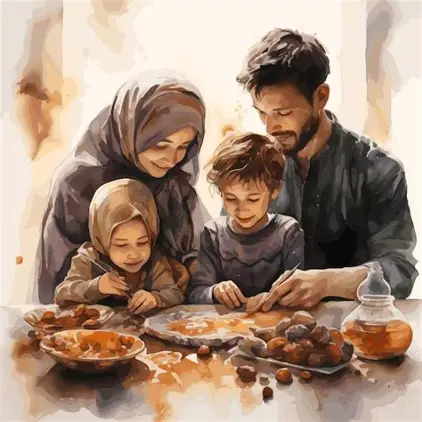
Active parental participation in children’s playtime, whether through storytelling, drawing, building with them, or even engaging in lighthearted activities like pillow fights, is crucial for their holistic development and significantly strengthens family bonds.1 This hands-on engagement demonstrates the value of these activities and fosters a positive, connected family environment.
Conclusion: Embracing Purposeful Holidays for a Blessed Life
By consciously embracing the Islamic perspective on time as a divine trust (Amanah), parents possess the profound ability to transform school holidays from periods of potential idleness into vibrant, dynamic opportunities for their children’s holistic growth. A balanced and purposeful approach, encompassing spiritual enrichment, intellectual development, robust physical activity, and meaningful social engagement—all meticulously guided by the timeless wisdom of the Sunnah—fosters the development of well-rounded, resilient individuals. This intentional utilization of time not only benefits children in this life by promoting focus, discipline, and strong character, but critically, it prepares them for the Hereafter, ensuring they are among “those who have believed and done righteous deeds”.8
The journey of raising children in accordance with profound Islamic principles within the complexities of the modern world is undeniably a demanding yet deeply rewarding endeavor. It necessitates conscious effort, unwavering consistency, and immense patience. Parents should take heart in knowing that every sincere, small step taken towards fostering productive and spiritually enriching activities for their children holds significant weight in the sight of Allah.10 Cultivate deep trust in Allah’s divine provision (
rizq) and His overarching plan, understanding that He will abundantly bless all sincere efforts.58
May Allah (SWT) bestow upon all parents the profound wisdom, unwavering strength, and divine guidance to lovingly nurture their children’s minds, bodies, and souls. May He enable them to utilize every precious moment as a cherished means of drawing closer to Him, and may He count them among those who achieve ultimate success in both this transient life and the eternal Hereafter. Ameen.